

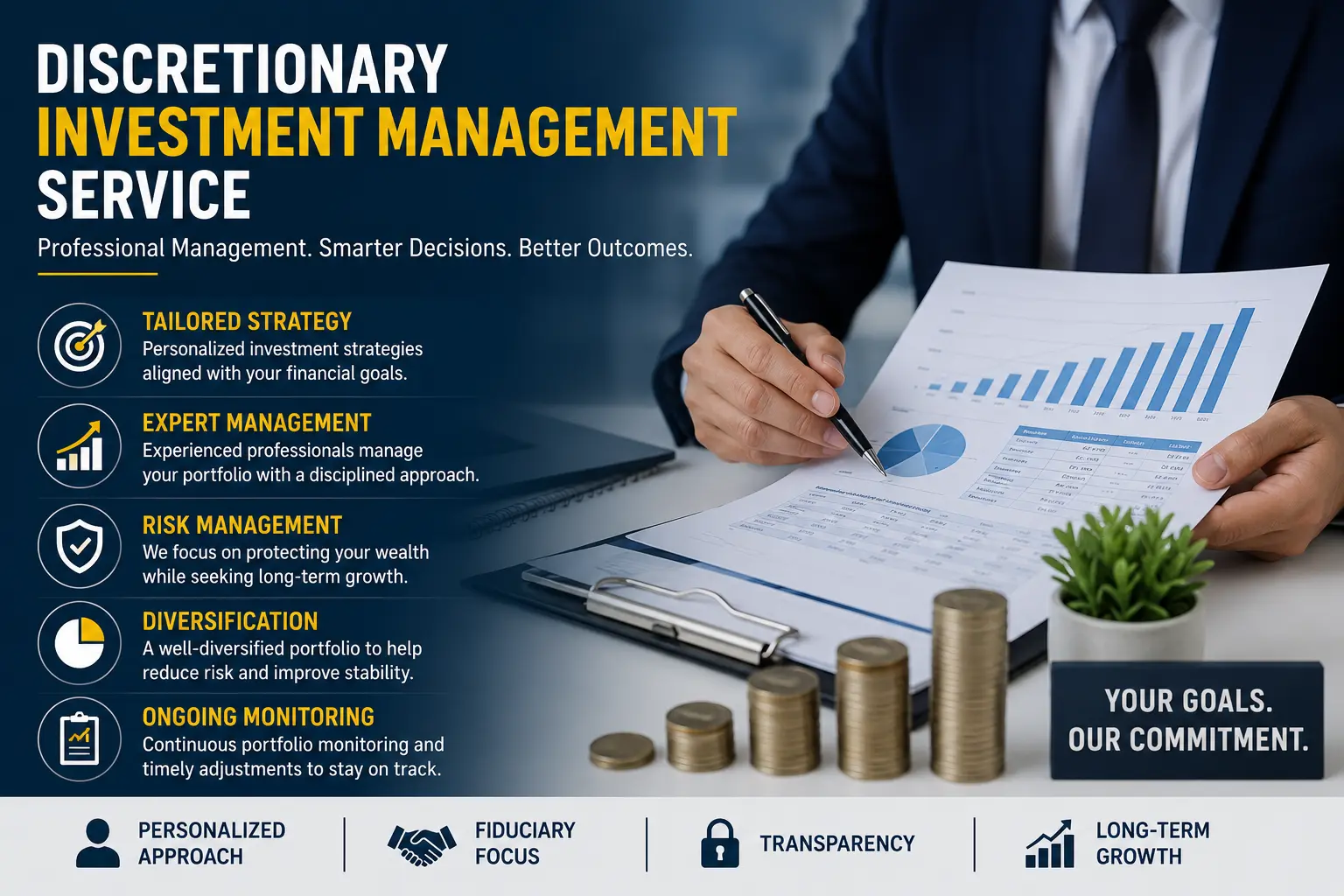
Discretionary Investment Management Service: A Complete Guide to Professional Portfolio Management
Managing your own investments can be rewarding, but it also comes with challenges. Markets change quickly, economic conditions evolve, and new investment opportunities appear every day. For many investors, keeping up with these changes becomes difficult, especially while balancing work, family, and other responsibilities.
That's where a discretionary investment management service can make a real difference.
Instead of making every investment decision yourself, you appoint a professional investment manager to oversee your portfolio based on your financial goals, risk tolerance, and long-term objectives. They have the authority to make investment decisions on your behalf without asking for approval before every transaction.
I've noticed that many investors start by managing their own portfolios because they enjoy learning about the markets. However, as their investments grow or life becomes busier, they often realize that successful investing requires more than following financial news. It demands discipline, consistent research, and a long-term strategy. Professional portfolio management helps remove much of the stress while keeping investments aligned with personal goals.
In this guide, you'll learn exactly what discretionary investment management is, how it works, its advantages and disadvantages, how much it typically costs, and whether it's the right choice for your financial future.
What Is a Discretionary Investment Management Service?
A discretionary investment management service is a professional investment solution where you authorize an experienced portfolio manager to make investment decisions on your behalf.
Unlike traditional investment advice, where you must approve every purchase or sale, discretionary management allows the investment manager to act immediately whenever opportunities or risks arise.
Before managing your portfolio, the investment manager takes time to understand your complete financial picture, including:
- Your financial goals
- Investment experience
- Risk tolerance
- Time horizon
- Income requirements
- Tax considerations
- Liquidity needs
- Ethical or sustainable investing preferences
These details are documented in an investment agreement that outlines exactly how your portfolio should be managed.
The goal isn't simply to generate returns. It's to build and maintain a portfolio that supports your personal financial objectives while managing risk appropriately.
How Does a Discretionary Investment Management Service Work?
Although every investment firm has its own process, most follow a structured approach.
Initial Consultation
Everything begins with a detailed conversation.
Rather than discussing individual stocks or funds, the focus is on understanding you as an investor.
The investment manager will ask questions such as:
- Why are you investing?
- When will you need the money?
- How comfortable are you with market volatility?
- Do you need regular income?
- What investments do you already own?
The answers form the foundation of your investment strategy.
Risk Assessment
Every investor has a different attitude toward risk.
Some people are comfortable with significant market fluctuations in pursuit of higher long-term growth. Others prefer stability, even if potential returns are lower.
Your investment manager evaluates both your willingness and your ability to take investment risk. These are not always the same. For example, someone may be comfortable taking risks but still require a conservative portfolio if they'll need their money in the near future.
Creating an Investment Strategy
Once your goals are clear, the manager develops a personalized investment strategy.
This typically includes:
- Target asset allocation
- Diversification approach
- Income objectives
- Growth expectations
- Investment restrictions
- Rebalancing strategy
- Risk management guidelines
This plan serves as the roadmap for managing your portfolio over the long term.
Building the Portfolio
The manager then selects investments that match your strategy.
Depending on your objectives, your portfolio may include:
- Individual stocks
- Government bonds
- Corporate bonds
- Exchange-traded funds (ETFs)
- Mutual funds
- Real estate investment trusts (REITs)
- Cash equivalents
- Alternative investments
Rather than concentrating on a handful of investments, professional managers typically diversify across different asset classes and industries to reduce unnecessary risk.
Ongoing Portfolio Management
Markets never stand still.
Company earnings change, interest rates move, inflation rises or falls, and global events influence investment performance.
Because the manager has discretionary authority, they can respond quickly without waiting for your approval every time an adjustment is needed.
This flexibility allows them to:
- Rebalance your portfolio
- Reduce unnecessary risk
- Capture new investment opportunities
- Replace underperforming investments
- Maintain your long-term investment strategy
Regular Reviews
Although your manager makes day-to-day investment decisions, you're never left out of the process.
Most firms provide:
- Performance reports
- Portfolio summaries
- Investment commentary
- Scheduled review meetings
- Online account access
These reviews help ensure your investment strategy continues to match your financial goals as your life evolves.
Key Features of Discretionary Investment Management
Understanding the core features helps explain why this service has become popular among investors seeking professional guidance.
Professional Portfolio Management
Your investments are managed by experienced professionals who spend their working days analyzing financial markets, evaluating companies, and monitoring economic trends.
Personalized Investment Strategy
No two investors are exactly alike.
Your portfolio is built specifically around your objectives rather than using a generic investment model.
Continuous Market Monitoring
Instead of reviewing investments only occasionally, professional managers monitor portfolios throughout changing market conditions.
Diversification
Diversification spreads investments across different asset classes, industries, and sectors.
This reduces the impact of poor performance from any single investment.
Automatic Rebalancing
Over time, strong-performing investments can grow into a larger percentage of your portfolio than originally intended.
Professional managers periodically rebalance holdings to maintain your preferred level of risk.
Risk Management
Managing risk is just as important as pursuing returns.
Investment managers continuously evaluate market conditions while ensuring your portfolio remains aligned with your investment objectives.
Benefits of Using a Discretionary Investment Management Service
Professional investment management offers several meaningful advantages.
Saves Valuable Time
Researching investments requires significant time and effort.
Professional managers handle:
- Market research
- Investment analysis
- Portfolio monitoring
- Economic updates
- Company earnings reviews
- Portfolio adjustments
This allows you to focus on your career, business, or family instead of constantly watching financial markets.
Removes Emotional Decision-Making
One of the biggest challenges for individual investors is controlling emotions.
Fear often causes investors to sell during market downturns, while excitement encourages buying after prices have already risen.
One practical lesson I've observed is that investors who constantly react to market headlines often make decisions they later regret. Having a professional follow a disciplined investment process helps reduce emotional investing and encourages long-term thinking.
Faster Investment Decisions
Financial markets move quickly.
Waiting several days for client approval could mean missing important opportunities or delaying necessary risk reduction.
Discretionary authority allows investment managers to act immediately when market conditions change.
Access to Professional Research
Investment firms often have access to extensive research resources that individual investors may not.
These resources include:
- Professional market analysis
- Corporate financial research
- Economic forecasts
- Portfolio analytics
- Risk modeling tools
This information supports more informed investment decisions.
Better Diversification
Many self-directed investors unknowingly concentrate too much of their portfolio in a single company or sector.
Professional portfolio construction typically spreads investments more effectively, helping reduce unnecessary concentration risk.
Potential Risks and Limitations
While discretionary investment management offers many benefits, it is important to understand that no investment strategy is risk-free. A good investment manager will explain both the opportunities and the potential downsides before you invest.
Market Risk
Every investment is exposed to market risk.
Economic slowdowns, inflation, interest rate changes, geopolitical events, and unexpected global developments can affect portfolio performance. Even a well-diversified portfolio may temporarily lose value during periods of market volatility.
Professional management can help manage risk, but it cannot eliminate it.
Management Fees
Discretionary investment management is a premium service, and professional expertise comes at a cost.
Most providers charge an annual management fee based on the value of your portfolio. Depending on the investments used, there may also be fund expenses or transaction costs.
The key question isn't whether there are fees—it's whether the value provided justifies those costs.
Less Day-to-Day Control
Because you've given the investment manager discretionary authority, you won't approve every individual trade.
For many investors, this is a major advantage. Others may prefer to remain closely involved in every investment decision.
Before signing an agreement, make sure you're comfortable with the level of authority you're giving your portfolio manager.
Performance Is Never Guaranteed
One of the biggest misconceptions about professional investment management is that it guarantees higher returns.
It doesn't.
Even highly experienced managers experience periods of underperformance. Investing always involves risk, and past performance is never a guarantee of future results.
Active vs. Passive Investment Management
One important decision within discretionary portfolio management is whether to use active investments, passive investments, or a combination of both.
Active Management
Active managers aim to outperform the market through research, analysis, and investment selection.
They may:
- Buy undervalued companies
- Reduce exposure during uncertain markets
- Rotate between industries
- Adjust portfolios based on economic conditions
Advantages
- Greater flexibility
- Potential to outperform benchmarks
- Active risk management
Disadvantages
- Higher costs
- Results depend on manager skill
- Performance may vary from year to year
Passive Management
Passive investing focuses on tracking a market index instead of trying to beat it.
Most passive portfolios use index funds or ETFs.
Advantages
- Lower fees
- Broad diversification
- Consistent market exposure
Disadvantages
- Limited flexibility
- Cannot avoid broad market declines
- No opportunity to outperform the benchmark through security selection
Many discretionary investment managers combine both approaches to create a balanced portfolio.
Why Asset Allocation Matters
Many people believe investment success comes from choosing the perfect stock.
In reality, asset allocation often has a much greater impact on long-term results.
Asset allocation refers to how your investments are divided among different asset classes.
A diversified portfolio may include:
- Equities for long-term growth
- Bonds for stability and income
- Cash for liquidity
- Property investments for diversification
- Alternative investments for additional return potential
A younger investor with a long investment horizon may allocate more toward growth assets, while someone approaching retirement may emphasize stability and income.
Professional investment managers regularly review this allocation to ensure it remains appropriate as your circumstances change.
Typical Costs and Fees
Before choosing a discretionary investment management service, it's important to understand exactly what you're paying for.
Common fees include:
Annual Management Fee
This is usually calculated as a percentage of assets under management.
For example, if your portfolio grows, the management fee generally increases proportionally.
Underlying Fund Costs
If your portfolio includes mutual funds or ETFs, those investments may have their own operating expenses.
These costs are separate from the manager's fee.
Transaction Costs
Buying and selling investments may involve trading costs depending on the provider and investment strategy.
Custody Fees
Some firms charge for holding and safeguarding investment assets through a custodian.
Always request a complete fee schedule so there are no unexpected charges later.
How to Choose the Right Investment Manager
Selecting the right investment manager is one of the most important financial decisions you'll make.
Rather than focusing only on recent performance, evaluate the overall quality of the service.
Look for Experience
An experienced manager should have a clear investment philosophy and a disciplined decision-making process.
Ask how long they've been managing portfolios and how they approach different market conditions.
Understand Their Investment Philosophy
Every manager invests differently.
Some focus on long-term growth.
Others prioritize income generation or capital preservation.
Choose someone whose investment philosophy aligns with your own financial objectives.
Ask About Communication
Good investment management isn't just about returns.
You should also understand:
- How often you'll receive reports
- Whether you'll have regular review meetings
- How easy it is to contact your investment manager
- How portfolio changes are explained
Clear communication builds long-term confidence.
Review Transparency
A trustworthy manager should clearly explain:
- Investment strategy
- Risks
- Fees
- Portfolio holdings
- Performance reporting
Avoid providers that make unrealistic promises or avoid discussing potential risks.
Questions to Ask Before Signing an Agreement
Before committing to a discretionary investment management service, ask questions such as:
- Who will actually manage my portfolio?
- What investment strategy do you follow?
- How is risk monitored?
- What are the total annual fees?
- How often will my portfolio be reviewed?
- Can my investment strategy change if my goals change?
- How will performance be measured?
- What happens during a market downturn?
The answers will help you determine whether the service matches your expectations.
Common Mistakes Investors Make
Over the years, I've noticed that many investment mistakes have little to do with intelligence and everything to do with emotions and discipline.
Here are some of the most common ones.
Trying to Time the Market
Many investors wait for the "perfect" time to invest.
Unfortunately, predicting short-term market movements consistently is extremely difficult.
A disciplined long-term strategy often produces better results than repeatedly moving in and out of the market.
Chasing Last Year's Winners
Investments that performed exceptionally well last year may not continue performing the same way.
Buying based solely on recent performance can lead to disappointment.
Ignoring Diversification
Putting too much money into one company, industry, or investment creates unnecessary risk.
Diversification helps reduce the impact of poor performance from any single investment.
Checking Investments Every Day
One habit I've seen repeatedly is investors monitoring their portfolios several times a day.
While staying informed is important, constantly watching short-term price movements often increases stress without improving long-term investment decisions.
Reviewing your portfolio periodically is usually more productive than reacting to every market headline.
Focusing Only on Returns
Higher returns often require accepting greater risk.
A successful portfolio isn't simply the one with the highest return—it's the one that helps you achieve your financial goals while keeping risk at a level you're comfortable with.
Who Should Consider a Discretionary Investment Management Service?
Professional discretionary portfolio management may be an excellent choice for investors who:
- Have demanding careers and limited time
- Own businesses and prefer to outsource investment decisions
- Are planning for retirement
- Have inherited significant assets
- Want professional investment guidance
- Prefer long-term investing over frequent trading
- Value disciplined portfolio management
It may be less suitable for investors who enjoy making every investment decision themselves or actively trade on a daily basis.
Practical Tips for Getting the Most From Your Investment Manager
Working with a professional manager is a partnership. The more open and proactive you are, the better they can align your portfolio with your goals.
Here are a few practical tips:
- Be honest about your risk tolerance rather than choosing an aggressive strategy because it sounds appealing.
- Share any major life changes—such as retirement plans, a business sale, or a growing family—as they may require adjustments to your investment strategy.
- Review your portfolio regularly, but avoid reacting to every short-term market movement.
- Ask questions whenever something isn't clear. A good investment manager should be willing to explain both the reasoning behind decisions and the risks involved.
- Stay focused on long-term objectives instead of comparing your portfolio with others. Every investor's goals, timeline, and risk profile are different.
One practical takeaway I've learned is that successful investing is rarely about making one brilliant decision. More often, it's the result of consistently following a well-designed plan through both good markets and challenging ones.
Final Thoughts
Choosing a discretionary investment management service is about more than handing your portfolio to someone else—it's about partnering with a professional who can help you stay focused on your long-term financial goals.
Successful investing isn't built on predicting tomorrow's market movements. It's built on having a clear strategy, maintaining discipline during periods of uncertainty, and making thoughtful decisions based on research rather than emotion. That's where professional portfolio management can provide meaningful value.
One lesson I've consistently seen over the years is that investors who remain committed to a well-structured investment plan often navigate market volatility with greater confidence than those who frequently change direction based on headlines or short-term trends. While no strategy can guarantee success, patience, diversification, and disciplined decision-making have historically been among the most reliable principles for long-term investing.
Before selecting a discretionary investment manager, take the time to understand their investment philosophy, fee structure, communication style, and approach to risk management. The strongest client-manager relationships are built on transparency, trust, and shared financial objectives.
Ultimately, discretionary investment management isn't about giving up control—it's about gaining access to professional expertise while keeping your investments aligned with your personal goals. Whether you're building wealth, preparing for retirement, preserving family assets, or simply looking for a more hands-off approach, the right investment manager can help you invest with greater confidence and a clearer long-term perspective.
Frequently Asked Questions
What is a discretionary investment management service?
A discretionary investment management service allows a professional investment manager to make investment decisions on your behalf. They manage your portfolio according to your agreed investment strategy, financial goals, and risk tolerance.
How does discretionary investment management work?
The investment manager creates a personalized portfolio based on your objectives and continuously monitors it. They can buy or sell investments without asking for your approval before every transaction.
What is the difference between discretionary and advisory investment management?
With discretionary management, the manager makes investment decisions for you. With advisory management, the advisor provides recommendations, but you decide whether to approve each trade.