

What Is a Finance Charge? Meaning, Examples, Types, and Ways to Avoid Extra Costs
Understanding the true cost of borrowing money is essential for making smart financial decisions. Many people focus only on monthly payments or interest rates, but another important factor often goes unnoticed: the finance charge.
Whether you use a credit card, take out a personal loan, finance a vehicle, or make purchases through installment plans, finance charges can significantly affect the total amount you pay. Knowing how these charges work helps you manage debt more effectively and avoid unnecessary expenses.
I learned this lesson personally when reviewing my first credit card statements. At first, I assumed the amount due was simply based on what I had spent. After paying only the minimum balance for several months, I noticed extra costs being added every billing cycle. Understanding finance charges completely changed the way I managed borrowing and helped me save money over time.
This guide explains everything you need to know about finance charges, including how they work, the different types, examples, formulas, and practical ways to minimize them.
What Is a Finance Charge?
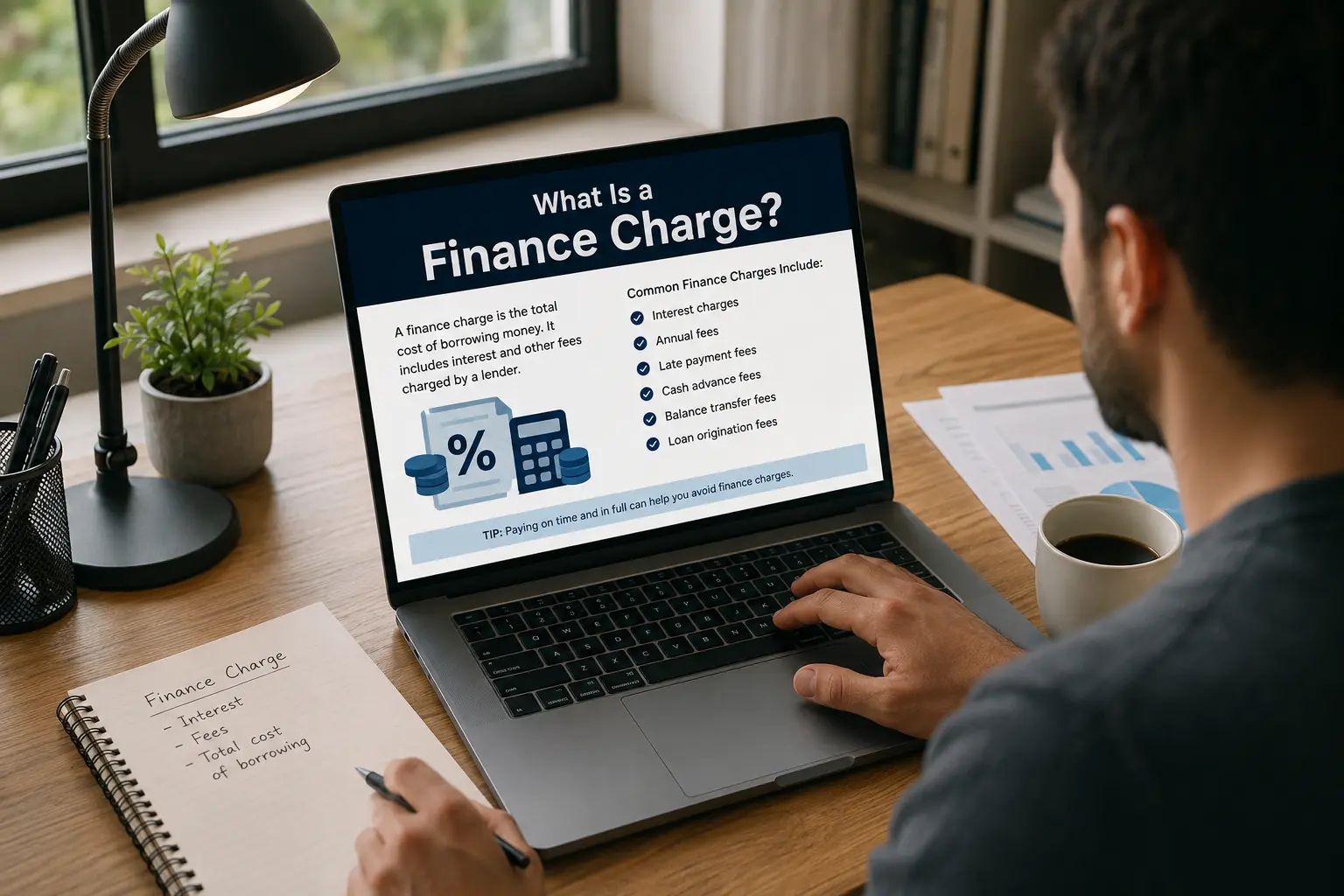
A finance charge is the total cost of borrowing money or using credit. It represents the amount a lender or creditor charges in exchange for providing access to funds.
In simple terms, a finance charge is the price you pay for borrowing money.
These charges can include:
- Interest
- Service fees
- Transaction fees
- Annual fees
- Late payment fees
- Cash advance fees
- Balance transfer fees
- Loan origination fees
Finance charges commonly appear on:
- Credit cards
- Auto loans
- Personal loans
- Mortgages
- Store financing plans
- Buy-now-pay-later programs
Why Finance Charges Matter
Finance charges directly affect how much borrowing actually costs.
For example, borrowing $5,000 may seem affordable, but additional fees and interest can increase the total repayment amount substantially.
Understanding finance charges helps consumers:
- Compare loan offers accurately.
- Avoid unnecessary fees.
- Reduce debt faster.
- Improve budgeting.
- Make informed financial decisions.
Ignoring finance charges can lead to paying hundreds or even thousands more than expected.
How Does a Finance Charge Work?
Whenever you borrow money and do not repay it immediately, the lender generally charges compensation for allowing you to use that money.
Suppose you purchase goods worth $1,000 using a credit card and carry the balance into the next billing cycle. The card issuer applies interest and possibly other fees. Those additional costs are considered finance charges.
Essentially:
Finance Charge = Cost of Using Credit
The longer you keep outstanding balances, the more finance charges you usually accumulate.
Types of Finance Charges
Finance charges are not limited to interest alone. Several costs may be included.
Interest Charges
Interest is the most common finance charge.
Lenders charge interest as a percentage of the outstanding balance.
Examples include:
- Credit card interest
- Mortgage interest
- Auto loan interest
- Personal loan interest
Annual Fees
Some financial products charge yearly membership fees.
These fees may apply to:
- Rewards credit cards
- Premium travel cards
- Business credit accounts
Annual fees are often considered part of the finance charge.
Late Payment Fees
Failing to make payments on time can trigger additional charges.
Late fees increase borrowing costs and may also negatively affect credit scores.
Cash Advance Fees
Using a credit card to withdraw cash usually involves:
- Higher interest rates
- Immediate interest accrual
- Additional transaction fees
Cash advances are generally more expensive than ordinary purchases.
Balance Transfer Fees
Moving debt from one credit card to another may involve transfer charges.
Typical balance transfer fees range from 3% to 5% of the transferred amount.
Loan Origination Fees
Some lenders charge fees for processing and approving loans.
Origination fees are common with:
- Personal loans
- Mortgages
- Student loans
These fees increase the overall borrowing cost.
Service Charges
Certain lenders impose administrative or maintenance fees.
Examples include:
- Monthly account fees
- Processing charges
- Documentation fees
Finance Charge Examples
Understanding practical examples makes the concept easier.
Credit Card Example
Suppose:
- Balance: $2,000
- Annual Percentage Rate (APR): 18%
- Balance carried for one month
Monthly interest rate:
18% ÷ 12 = 1.5%
Finance charge:
$2,000 × 1.5%
= $30
You would owe:
$2,030
instead of only $2,000.
Personal Loan Example
Suppose you borrow:
$10,000
Interest over the loan period totals:
$1,800
Loan processing fee:
$200
Total finance charge:
$1,800 + $200
= $2,000
Total repayment amount:
$12,000
Auto Loan Example
Vehicle price:
$25,000
Interest over five years:
$4,500
Loan fee:
$500
Total finance charge:
$5,000
Total amount paid:
$30,000.
Finance Charge vs Interest
Many people assume finance charges and interest are identical.
They are related, but not exactly the same.
Interest is one component of a finance charge, but finance charges may include several additional costs.
What Is APR?
APR stands for Annual Percentage Rate.
It reflects the yearly cost of borrowing and helps consumers compare financial products more accurately.
APR often includes:
- Interest rates
- Certain fees
- Loan costs
A lower APR generally means lower borrowing expenses.
How Are Finance Charges Calculated?
Lenders may use different calculation methods.
Average Daily Balance Method
This method is commonly used by credit card companies.
The average account balance during the billing cycle determines the finance charge.
Formula:
Finance Charge = Average Daily Balance × Periodic Rate
Daily Balance Method
Interest is calculated based on the balance each day.
If the balance changes frequently, finance charges may vary accordingly.
Previous Balance Method
Some lenders calculate charges based on the balance at the beginning of the billing cycle.
Adjusted Balance Method
Payments made during the cycle are deducted before calculating the charge.
This method can reduce overall costs.
Factors That Affect Finance Charges
Several variables influence how much you pay.
Interest Rate
Higher rates usually produce larger finance charges.
Outstanding Balance
Bigger balances generate greater costs.
Length of Time
Keeping debt longer increases the amount charged.
Payment Habits
Making only minimum payments allows interest to accumulate.
Fees and Penalties
Late payments and special transactions can increase borrowing expenses significantly.
Where Do Finance Charges Appear?
Finance charges are commonly found in:
Credit Cards
Monthly statements often contain a finance charge section.
Mortgages
Mortgage documents disclose total interest and related costs.
Auto Loans
Vehicle financing agreements include borrowing costs.
Personal Loans
Loan disclosures specify fees and total finance charges.
Retail Financing
Store installment plans may contain hidden costs and fees.
How to Avoid Finance Charges
One of the most valuable financial habits I developed was paying credit card balances in full every month. Doing so eliminated interest charges and helped me maintain better control over spending.
Here are several practical strategies.
Pay Balances in Full
Many credit cards provide a grace period.
Paying the full statement balance before the due date often prevents interest charges.
Make Payments On Time
Late payments can result in:
- Penalty fees
- Higher interest rates
- Additional finance charges
Automatic payments can help avoid missed due dates.
Avoid Cash Advances
Cash advances are among the most expensive forms of borrowing.
Using debit cards or emergency savings is usually more cost-effective.
Compare APRs
Before borrowing, compare:
- Interest rates
- Fees
- Terms
- Repayment schedules
Lower-cost options can save substantial amounts over time.
Borrow Only What You Need
Keeping balances small reduces interest expenses.
Responsible borrowing helps maintain financial flexibility.
Pay More Than the Minimum
Minimum payments extend debt repayment periods.
Paying extra each month reduces:
- Interest costs
- Finance charges
- Total repayment time
Common Misconceptions About Finance Charges
Finance Charges Mean Something Is Wrong
Not necessarily.
Finance charges are normal whenever money is borrowed and balances are carried over time.
Paying the Minimum Balance Avoids Interest
This is false.
Minimum payments prevent delinquency but usually do not eliminate interest charges.
All Loans Have the Same Finance Charges
Different lenders use varying rates and fee structures.
Comparing offers is essential.
Zero Percent Promotions Last Forever
Promotional periods eventually expire.
Once they end, standard finance charges may apply.
Why Reading Loan Agreements Matters
Financial agreements contain valuable information regarding:
- APR
- Fees
- Penalties
- Repayment schedules
- Total borrowing costs
Carefully reviewing these details helps prevent unpleasant surprises.
Whenever I consider any financing option, I always review the total repayment amount instead of focusing solely on monthly payments. This habit has helped me avoid expensive borrowing decisions and better understand the real cost of credit.
Conclusion
A finance charge represents the total cost of using borrowed money. While interest is the most recognizable component, finance charges may also include annual fees, service fees, late penalties, and other costs.
Understanding how finance charges work allows consumers to make smarter financial decisions and avoid unnecessary expenses. By paying balances promptly, comparing borrowing options carefully, and maintaining disciplined repayment habits, it becomes possible to reduce borrowing costs and improve long-term financial health.
Ultimately, the key to successful money management is not simply obtaining credit but understanding its true cost. Knowing how finance charges operate empowers you to borrow responsibly, protect your finances, and keep more of your hard-earned money.
FAQ :
Is a Finance Charge Good or Bad?
A finance charge is neither inherently good nor bad. It is simply the cost associated with borrowing money.
Can Finance Charges Be Avoided?
Yes.
Paying balances in full and making timely payments can often eliminate many charges.
Are Finance Charges Tax Deductible?
Certain interest expenses may qualify under specific circumstances, but eligibility depends on applicable tax laws and individual situations.
Do Debit Cards Have Finance Charges?
Generally, no.
Because debit cards use available funds instead of borrowed money, finance charges usually do not apply.
Does Carrying a Credit Card Balance Build Credit Faster?
No.
Maintaining responsible usage and making timely payments matter more than paying interest.
Are Finance Charges Refundable?
In some cases, lenders may reverse certain fees, especially if an error occurred or goodwill adjustments are granted.