

What Is Renters Insurance For?
A Complete Guide to Protecting Your Home, Belongings, and Peace of Mind
Many people assume that the property owner's insurance policy automatically protects everything inside a rented apartment or house. Unfortunately, this is one of the most common and expensive misunderstandings among renters.
A landlord's insurance generally covers the building itself, but it rarely protects a tenant's personal belongings or financial responsibility. If a fire destroys your furniture, a burglary steals your electronics, or a visitor suffers an injury inside your rental home, you may have to pay those costs yourself.
This is where renters insurance becomes important.
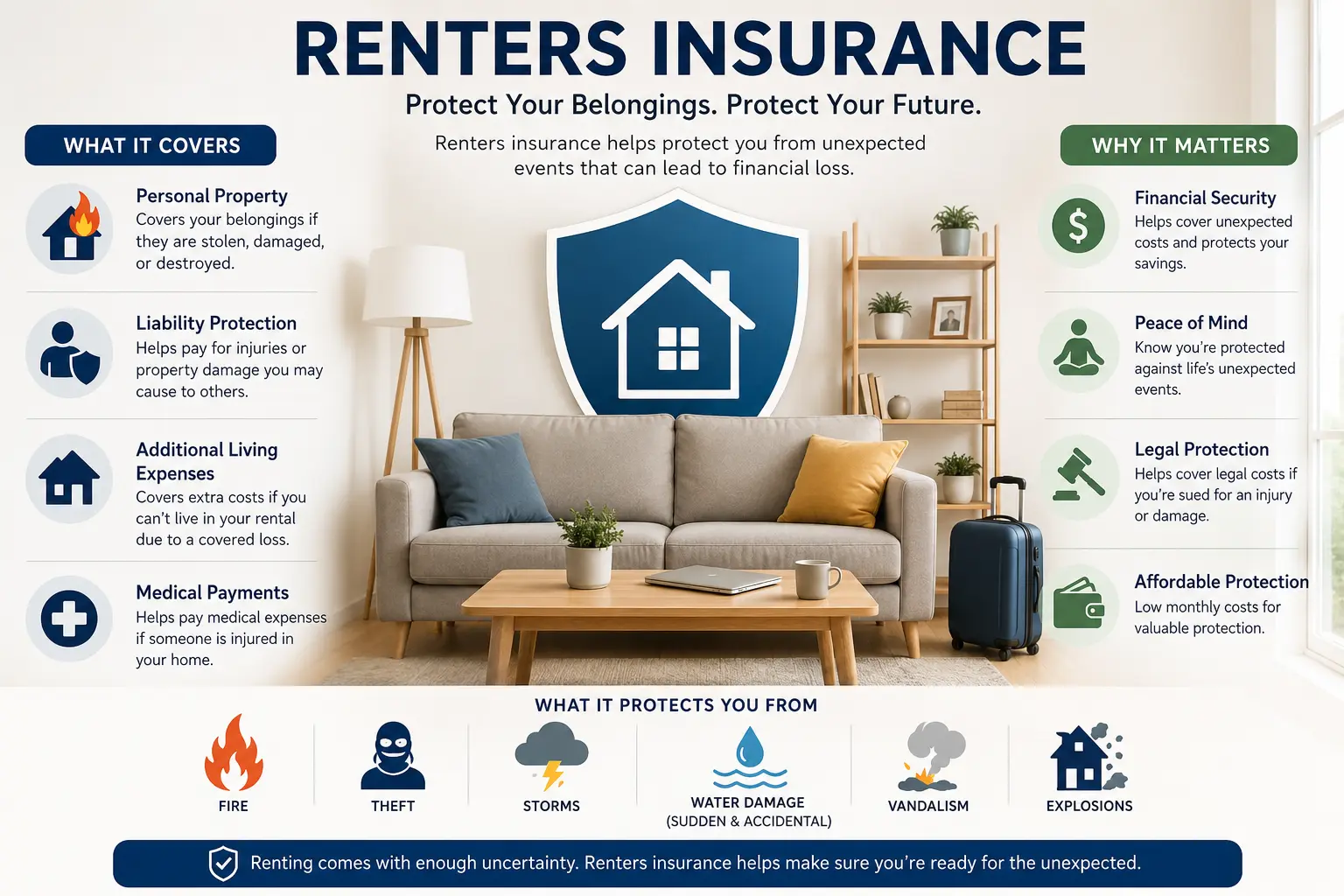
Renters insurance is designed to protect tenants from unexpected financial losses. It offers coverage for personal belongings, liability claims, additional living expenses, and many situations that can create significant financial stress.
This guide explains exactly what renters insurance is for, how it works, what it covers, what it does not cover, and whether it is worth purchasing.
What Is Renters Insurance?
Renters insurance is a type of insurance policy created specifically for people who rent apartments, houses, condominiums, or other living spaces.
Unlike homeowners insurance, renters insurance does not insure the physical structure of the building. Instead, it focuses on protecting the tenant's belongings and financial responsibilities.
The policy generally provides three primary forms of protection:
- Personal property coverage
- Personal liability coverage
- Additional living expenses coverage
These protections work together to help renters recover financially after unexpected events.
Why Do People Need Renters Insurance?
Many renters believe they own very few valuable possessions. However, when you calculate the total value of your belongings, the numbers can become surprisingly large.
Consider items such as:
- Furniture
- Laptops
- Smartphones
- Televisions
- Clothing
- Kitchen appliances
- Jewelry
- Sports equipment
- Home office equipment
Replacing everything after a disaster can cost thousands of dollars.
Renters insurance exists to reduce the financial burden caused by accidents, theft, lawsuits, or temporary displacement.
Personal Property Protection
What Does It Cover?
Personal property coverage protects your belongings if they are damaged, destroyed, or stolen due to covered events.
Common covered events include:
- Fire
- Smoke damage
- Theft
- Vandalism
- Windstorms
- Lightning
- Certain water damage incidents
- Explosions
If these events damage your belongings, your insurer may reimburse you according to your policy limits.
Several years ago, a renter returned home after a kitchen fire started in a neighboring apartment. Smoke had damaged clothing, furniture, and electronics throughout the unit.
Although the building owner repaired the apartment itself, the renter had to replace many personal items. Renters insurance helped cover those losses, preventing a significant financial setback.
Protection Against Theft
One of the most common reasons people file renters insurance claims is theft.
Coverage may apply if:
- Someone breaks into your apartment.
- Your belongings are stolen from your vehicle.
- Items are stolen while traveling.
- Theft occurs in certain storage areas.
For example, if a laptop is stolen during a trip, renters insurance may provide coverage depending on the policy terms.
This protection often surprises renters because coverage can extend beyond the rental property itself.
Personal Liability Coverage
Liability coverage protects you if someone is injured or their property is damaged and you are legally responsible.
Examples include:
- A guest slips and falls in your apartment.
- Your pet injures another person.
- You accidentally damage a neighbor's property.
- Water from your unit damages another apartment.
Without liability coverage, legal expenses and medical costs can become extremely expensive.
Liability protection may help pay for:
- Medical expenses
- Legal fees
- Court judgments
- Settlement costs
For many renters, this is one of the most valuable parts of the policy.
Additional Living Expenses Coverage
Sometimes a rental property becomes temporarily uninhabitable due to a covered loss.
Examples include:
- Major fire damage
- Severe smoke damage
- Certain water losses
- Structural damage
If you cannot live in your rental home, additional living expenses coverage may help pay for:
- Hotel stays
- Temporary housing
- Restaurant meals
- Transportation costs
- Additional living expenses
This coverage allows renters to maintain their standard of living while repairs are completed.
What Does Renters Insurance Usually Cover?
Most policies commonly cover:
Covered Property
- Furniture
- Clothing
- Electronics
- Appliances
- Bedding
- Books
- Sporting equipment
- Home office equipment
- Personal decorations
Covered Situations
- Fire
- Theft
- Vandalism
- Smoke damage
- Certain storms
- Accidental damage from covered events
Covered Financial Risks
- Lawsuits
- Medical payments
- Temporary housing costs
What Does Renters Insurance Usually Not Cover?
Understanding exclusions is equally important.
Policies often exclude:
- Flood damage
- Earthquakes
- Intentional damage
- Pest infestations
- Wear and tear
- Maintenance issues
- Business-related losses beyond policy limits
Certain valuable items such as expensive jewelry, collectibles, artwork, or luxury watches may have limited coverage unless additional protection is purchased.
Always review the policy details carefully.
Actual Cash Value vs. Replacement Cost
Renters insurance policies often use one of two valuation methods.
Actual Cash Value
This method pays the item's current value after depreciation.
For example:
- Five-year-old laptop purchase price: $1,200
- Current value: $500
The insurer pays approximately $500.
Replacement Cost Coverage
This method pays the amount needed to purchase a similar new item.
The same laptop may receive enough reimbursement to buy a comparable replacement.
Although replacement cost policies may cost slightly more, many renters prefer this option.
How Much Coverage Do You Need?
A good starting point is creating a personal inventory.
Walk through your home and list:
- Electronics
- Furniture
- Clothing
- Kitchen items
- Decorations
- Tools
- Accessories
Many renters underestimate the value of their possessions.
A modest apartment can easily contain tens of thousands of dollars worth of belongings.
Choosing appropriate coverage limits ensures adequate financial protection.
Is Renters Insurance Required?
Renters insurance is not always legally required.
However, many property owners include insurance requirements in lease agreements.
Even when it is optional, many tenants purchase coverage because the financial protection often outweighs the cost.
Landlords increasingly prefer insured tenants because liability claims and disputes become easier to manage.
How Much Does Renters Insurance Cost?
Renters insurance is often considered one of the most affordable types of insurance.
The cost depends on factors such as:
- Coverage amount
- Location
- Deductible amount
- Claims history
- Property characteristics
- Additional endorsements
Many people find that the monthly premium costs less than replacing a single stolen electronic device.
Personal Experience and Practical Advice
One practical lesson many experienced renters share is to document belongings before a loss occurs.
Simple actions include:
- Taking photos of valuable items.
- Saving receipts.
- Creating digital inventories.
- Recording serial numbers.
After an unexpected loss, these records can simplify the claims process significantly.
Another useful tip is reviewing your policy annually. As people purchase new electronics, furniture, or equipment, coverage needs may change over time.
Benefits of Renters Insurance
Renters insurance provides several important advantages:
Financial Protection
Unexpected events can create large expenses. Insurance helps reduce these risks.
Peace of Mind
Knowing your belongings and liability risks are covered can reduce stress.
Liability Security
Legal claims and injuries can become extremely expensive without coverage.
Temporary Housing Assistance
Additional living expenses coverage helps maintain stability after disasters.
Affordable Protection
Compared to potential losses, renters insurance often offers excellent value.
Common Questions About Renters Insurance
Does my landlord's insurance cover my belongings?
No. The landlord's policy generally protects the building itself, not your personal possessions.
Does renters insurance cover roommates?
Usually not. Roommates often need separate policies unless specifically included.
Does renters insurance cover theft outside my home?
In many cases, yes. Coverage may apply to stolen belongings away from the residence.
Does it cover pets?
Liability coverage may apply to certain pet-related incidents, depending on the policy.
Can I cancel my policy?
Yes, policies can generally be canceled according to the insurer's procedures.
Who Should Buy Renters Insurance?
Renters insurance may be beneficial for:
- Apartment renters
- House renters
- Students living away from home
- Young professionals
- Families renting homes
- Remote workers
- Long-term tenants
Anyone who owns personal belongings or wants liability protection can potentially benefit from coverage.
Finally
It is designed to protect renters from financial losses involving personal belongings, liability claims, and temporary housing expenses.
A single fire, theft, lawsuit, or unexpected event can create costs that far exceed the price of a renters insurance policy. For many tenants, it serves as an affordable safety net that protects both possessions and financial stability.
Whether you rent a small apartment, a family home, or a shared living space, renters insurance can provide valuable protection, peace of mind, and confidence during unexpected situations.
In today's uncertain world, protecting your belongings and financial future is often one of the smartest decisions a renter can make.