

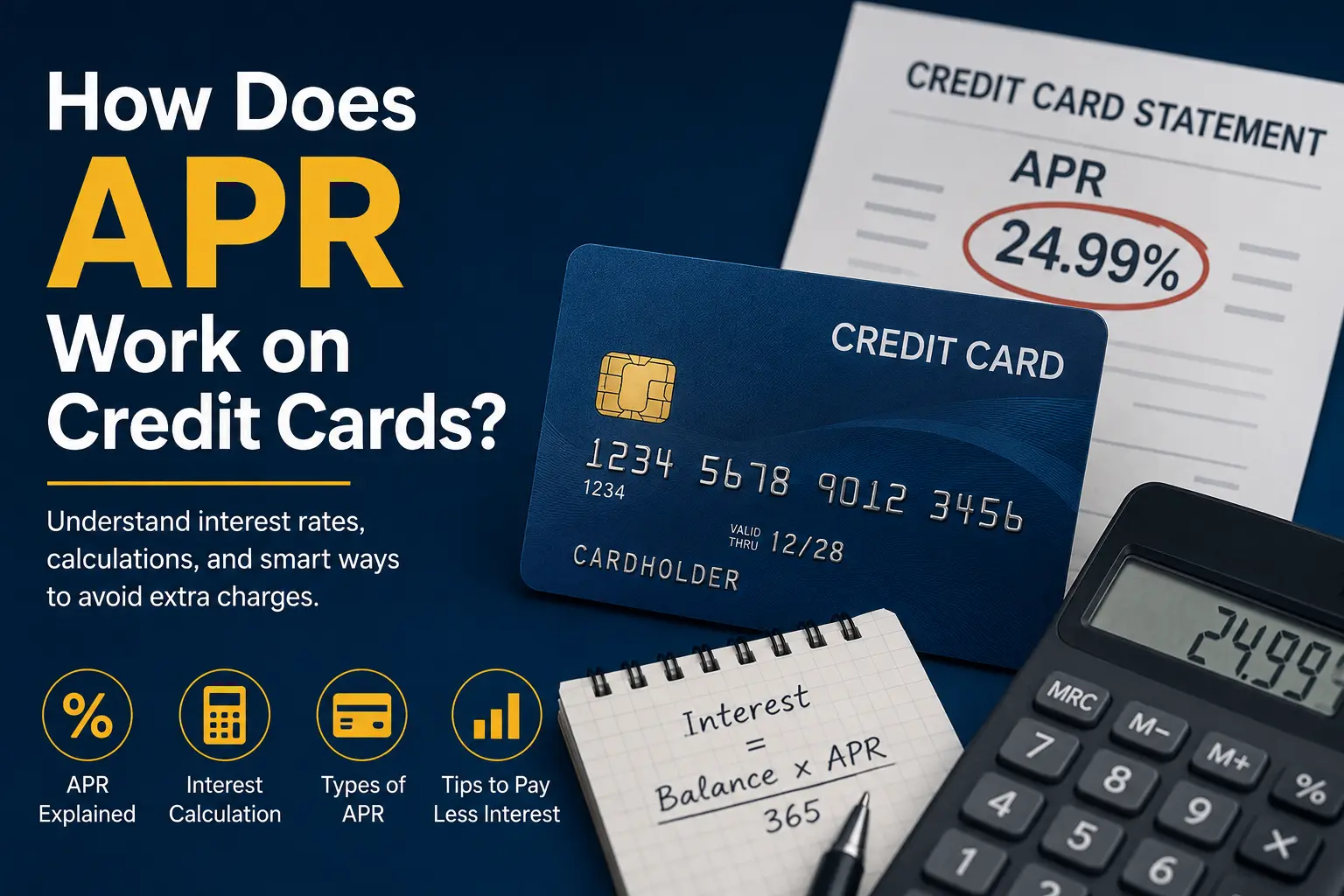
If you're new to credit cards, one of the first financial terms you'll encounter is APR. You'll see it in credit card advertisements, account agreements, and monthly statements. But what does APR actually mean, and how does it affect the money you pay?
Many people assume APR is simply an interest rate. While that's partially true, there's much more to understand. Knowing how APR works can help you avoid unnecessary interest charges, compare credit card offers more effectively, and build healthier financial habits.
I learned this lesson early after helping a family member compare two credit cards that looked almost identical. One offered attractive rewards, while the other had fewer perks but a lower purchase APR. Initially, the rewards card seemed like the obvious choice. However, after calculating how much interest would accumulate if a balance wasn't paid in full every month, the lower APR card turned out to be the smarter option. That experience reinforced an important lesson: rewards are valuable, but understanding APR can save much more money over time.
This comprehensive guide explains everything you need to know about credit card APR, how interest is calculated, the different types of APR, and practical strategies for minimizing borrowing costs.
What Is APR on a Credit Card?
APR stands for Annual Percentage Rate. It represents the yearly cost of borrowing money when you carry a balance on your credit card.
Rather than charging interest once per year, credit card companies typically calculate interest daily using your APR and apply those charges throughout your billing cycle.
For example:
- Credit Card Balance: $2,000
- Purchase APR: 20%
- Daily interest is calculated using a daily periodic rate derived from the APR.
The higher your balance and the longer you carry it, the more interest you'll pay.
The most important point to remember is this:
If you pay your statement balance in full by the due date every billing cycle, you'll usually pay no purchase interest at all.
What Is a Bad APR for a Credit Card?
A bad APR for a credit card is generally considered to be one that is significantly higher than the average rate offered to borrowers with good credit. While the exact number can vary depending on market conditions and your credit profile, an APR above 25% is often viewed as expensive because carrying a balance can lead to substantial interest charges over time. For example, if you regularly pay only the minimum payment on a card with a high APR, even a relatively small balance can become much more costly due to daily compounding interest. However, the importance of APR depends on how you use your credit card. If you consistently pay your full statement balance by the due date, you can usually avoid purchase interest altogether, making the APR less significant. If you expect to carry a balance occasionally, choosing a card with a lower APR can help reduce borrowing costs and make debt easier to manage.
Why APR Matters
APR directly affects how expensive it is to borrow money.
A difference of just a few percentage points may not seem significant, but over months or years, it can translate into hundreds or even thousands of dollars in additional interest.
Understanding APR helps you:
- Compare different credit cards accurately
- Estimate borrowing costs
- Decide whether financing a purchase is worthwhile
- Reduce long-term debt
- Improve financial planning
How Does Credit Card APR Actually Work?
APR only becomes relevant when you carry a balance after your payment due date.
Here's a simplified example.
Imagine you spend:
- Laptop: $1,200
- Groceries: $300
- Gas: $150
Total purchases: $1,650
If your statement closes showing a balance of $1,650 and you pay the entire amount before the due date, you generally pay:
Interest: $0
However, if you pay only: $300
The remaining balance continues accruing interest according to your purchase APR.
This is why carrying balances month after month becomes expensive.
Understanding the Credit Card Grace Period
One of the biggest misconceptions is that interest starts immediately after every purchase.
For most credit cards, that's not true.
A grace period is the time between:
- Statement closing date
- Payment due date
During this period, purchases typically don't accrue interest if the full statement balance is paid.
For example:
Purchase Date:
March 5
Statement Date:
March 30
Payment Due:
April 24
If the entire statement balance is paid by April 24, purchase interest is generally avoided.
Missing that payment means interest begins accumulating according to your APR.
How Daily Interest Is Calculated
Although APR is an annual rate, credit card issuers usually calculate interest daily.
The process works like this:
Step 1: Convert APR into Daily Rate
Formula:
Daily Periodic Rate = APR ÷ 365
Example:
20% APR
20 ÷ 365 = 0.0548% per day
Step 2: Multiply by Daily Balance
Suppose your balance is:
$3,000
Daily interest:
$3,000 × 0.000548 = $1.64
Step 3: Repeat Every Day
Each day's balance is used to calculate interest.
If your balance changes because you make purchases or payments, the daily interest changes too.
This process is known as daily compounding.
What Is Daily Compounding?
Daily compounding means interest can be charged not only on your purchases but also on previously accumulated interest if balances remain unpaid.
For example:
Day 1 Balance: $2,000
Interest: $1.10
New Balance: $2,001.10
The next day's interest is calculated on the slightly higher balance.
Over many months, this compounding effect significantly increases borrowing costs.
Types of Credit Card APR
Not every transaction uses the same APR.
Understanding the different categories helps prevent surprises.
Purchase APR
This is the standard interest rate applied to regular purchases when balances aren't paid in full.
Examples include:
- Shopping
- Online orders
- Dining
- Utility bills
Balance Transfer APR
Applies when debt is transferred from another credit card.
Many cards offer introductory promotional rates for balance transfers.
Once the promotional period ends, the regular APR usually applies.
Cash Advance APR
Cash advances almost always have:
- Higher APR
- Immediate interest charges
- No grace period
Using cash advances should generally be reserved for genuine emergencies.
Penalty APR
Missing payments repeatedly may trigger a significantly higher APR.
This increased rate can remain in effect until a history of timely payments is re-established.
Introductory APR
Many cards offer promotional financing, such as:
- 0% APR on purchases
- 0% APR on balance transfers
These offers usually last several months before converting to the standard variable APR.
Fixed APR vs Variable APR
Fixed APR
A fixed APR generally remains stable but may still change under certain conditions, such as changes to account terms with proper notice.
It isn't permanently locked forever.
Variable APR
Most modern credit cards use a variable APR.
The rate changes based on a financial benchmark plus an additional margin determined by the card issuer.
If market rates rise, your APR may increase.
If market rates fall, your APR could decrease.
Does Everyone Get the Same APR?
No. Credit card companies evaluate many factors before assigning your APR.
Common considerations include:
- Credit score
- Payment history
- Income
- Existing debt
- Credit utilization
- Length of credit history
Applicants with stronger credit profiles often qualify for lower APR ranges.
How Much Difference Does APR Really Make?
Let's compare two hypothetical cards.
Card A :
APR:
18%
Balance:
$5,000
Card B
APR:
28%
Balance:
$5,000
Even if monthly payments are identical, the higher APR card will generate substantially more interest over time.
This demonstrates why choosing a lower APR matters if you expect to carry balances.
How to Avoid Paying APR
One of the easiest ways to avoid credit card interest is surprisingly simple.
Pay your statement balance in full every month.
Additional strategies include:
- Set automatic payments.
- Pay before the due date.
- Avoid unnecessary borrowing.
- Track spending weekly.
- Build an emergency fund.
These habits reduce the likelihood of carrying balances.
Common APR Myths
Myth 1: APR Applies Immediately
Not necessarily.
If you pay the full statement balance during the grace period, purchase APR generally doesn't apply.
Myth 2: Lower APR Always Means the Better Card
Not always.
Someone who pays every statement in full may benefit more from stronger rewards than a slightly lower APR.
The best card depends on your spending habits.
Myth 3: Minimum Payments Prevent Interest
Minimum payments keep your account in good standing.
However, interest usually continues accumulating on the remaining balance.
Myth 4: APR and Interest Rate Are Exactly the Same
They're closely related but not identical concepts.
APR represents the annual borrowing cost and provides a standardized way to compare lending products.
Example :
Let's imagine two friends each purchase a $2,500 home office setup.
Person A
Pays the entire balance before the due date.
Interest paid:
$0
Person B
Pays only the minimum each month.
Interest accumulates over many months.
Eventually, the same purchase costs considerably more than its original price.
This simple example illustrates why paying in full whenever possible is one of the smartest financial habits.
My Personal Approach to Managing Credit Card APR
Over the years, one habit has consistently helped me avoid unnecessary interest.
Instead of thinking about my available credit limit, I focus on my bank account balance.
Whenever I make a larger purchase, I mentally treat it as money already spent and set aside the funds needed to pay the statement in full.
I also schedule calendar reminders several days before each due date, even though automatic payments are enabled. This extra reminder gives me time to review my statement for unexpected charges and verify that everything looks correct before payment is processed.
These small routines require only a few minutes each month but can prevent expensive interest charges and late fees.
What Choosing a Credit Card Based on APR
Before applying for a credit card, consider the following questions:
Will you carry a balance?
If yes, prioritize a lower purchase APR.
Do you always pay in full?
Rewards, cash back, or travel benefits may become more valuable than focusing solely on APR.
Are you transferring debt?
Look for promotional balance transfer offers and understand when the standard APR begins.
Will you need cash advances?
Compare cash advance fees and APR carefully, although avoiding cash advances is generally the better choice.
Best Practices for Keeping Interest Costs Low
Developing consistent financial habits makes a significant difference over time.
Good practices include:
- Pay more than the minimum whenever possible.
- Monitor your monthly statements.
- Avoid maxing out your credit limit.
- Keep an emergency savings fund.
- Make payments early instead of waiting until the final day.
- Review APR changes announced by your card issuer.
- Avoid unnecessary balance transfers with high fees.
- Use budgeting tools to track spending.
These habits improve financial stability while reducing borrowing costs.
Final Thought
Understanding how APR works on credit cards is one of the most valuable financial skills you can develop. While APR determines the cost of borrowing, it doesn't have to become an expense you regularly pay. By understanding grace periods, daily interest calculations, different APR types, and responsible payment habits, you can use credit cards confidently while keeping borrowing costs under control.
The simplest strategy remains the most effective: spend within your means, review every monthly statement carefully, and pay your full statement balance whenever possible. Over time, these habits not only save money on interest but also strengthen your overall financial health and help you make smarter credit decisions for years to come.
Frequently Asked Questions
Does APR matter if I always pay my credit card in full?
Usually, no. If you consistently pay your full statement balance before the due date, purchase interest generally isn't charged.
Is a lower APR always better?
If you expect to carry balances, a lower APR can significantly reduce interest costs. If you never carry balances, rewards and benefits
may be more important.
Can my credit card APR change?
Yes. Many credit cards have variable APRs that can increase or decrease over time based on changes in financial benchmarks or account terms.
Why is my cash advance APR higher?
Cash advances typically involve greater risk for lenders and often begin accruing interest immediately without a grace period.
Does making the minimum payment stop interest?
No. Making the minimum payment usually prevents late payment consequences but interest generally continues accumulating on the remaining balance.
Can improving my credit help me qualify for a lower APR?
Yes. A stronger credit profile may improve your chances of qualifying for better borrowing terms when applying for a new credit card.