

Introduction: Why Understanding This Difference Actually Matters
When I first applied for a loan years ago, I thought all loans were essentially the same—borrow money, repay it with interest, and move on. I quickly learned that this assumption can cost you money, flexibility, and peace of mind.
One simple distinction changes everything: secured loans vs. unsecured loans.
This guide explains exactly what separates secured and unsecured loans, how lenders think about them, how borrowers experience them in real life, and—most importantly—which option might be right for you depending on your situation.
If you have ever wondered:
- Why some loans have lower interest rates
- Why others get approved faster
- Why lenders sometimes ask for collateral
- Or why missing payments can feel very different depending on the loan type
You’re in the right place.
Personal Loans with Low APR – Apply Online & Get Approved Fast
What Is a Loan? (Quick Context)
A loan is an agreement where a lender provides money upfront, and the borrower agrees to repay it over time with interest.
The key difference between loan types often comes down to risk—specifically, who carries it.
That’s where secured and unsecured loans come in.
What Is a Secured Loan?
A secured loan is a loan backed by collateral—an asset the lender can legally claim if the borrower fails to repay.
Common Examples of Collateral
- Property or real estate
- Vehicles
- Savings or fixed deposits
- Valuable equipment or assets
How Secured Loans Work (From Experience)
When I applied for a secured loan, the process felt slower—but more predictable. The lender focused heavily on the value and ownership of the asset, not just my income.
Once approved, the interest rate was noticeably lower. That’s because the lender’s risk was reduced—they had something tangible to fall back on.
Key Characteristics of Secured Loans
- Lower interest rates
- Higher borrowing limits
- Longer repayment terms
- Asset is at risk if payments are missed
What Is an Unsecured Loan?
An unsecured loan does not require any collateral. Approval is based entirely on the borrower’s creditworthiness.
Common Types of Unsecured Loans
- Personal loans
- Credit cards
- Short-term installment loans
- Some education or emergency loans
I’ve used unsecured loans during periods where speed mattered more than cost. Approval was quick—sometimes within hours—but the interest rate was significantly higher.
Why? Because the lender had no asset to recover if things went wrong.
Key Characteristics of Unsecured Loans
- No collateral required
- Faster approval
- Higher interest rates
- Lower borrowing limits
- Heavier reliance on credit history
The Core Difference Between Secured and Unsecured Loans
At a Glance Comparison
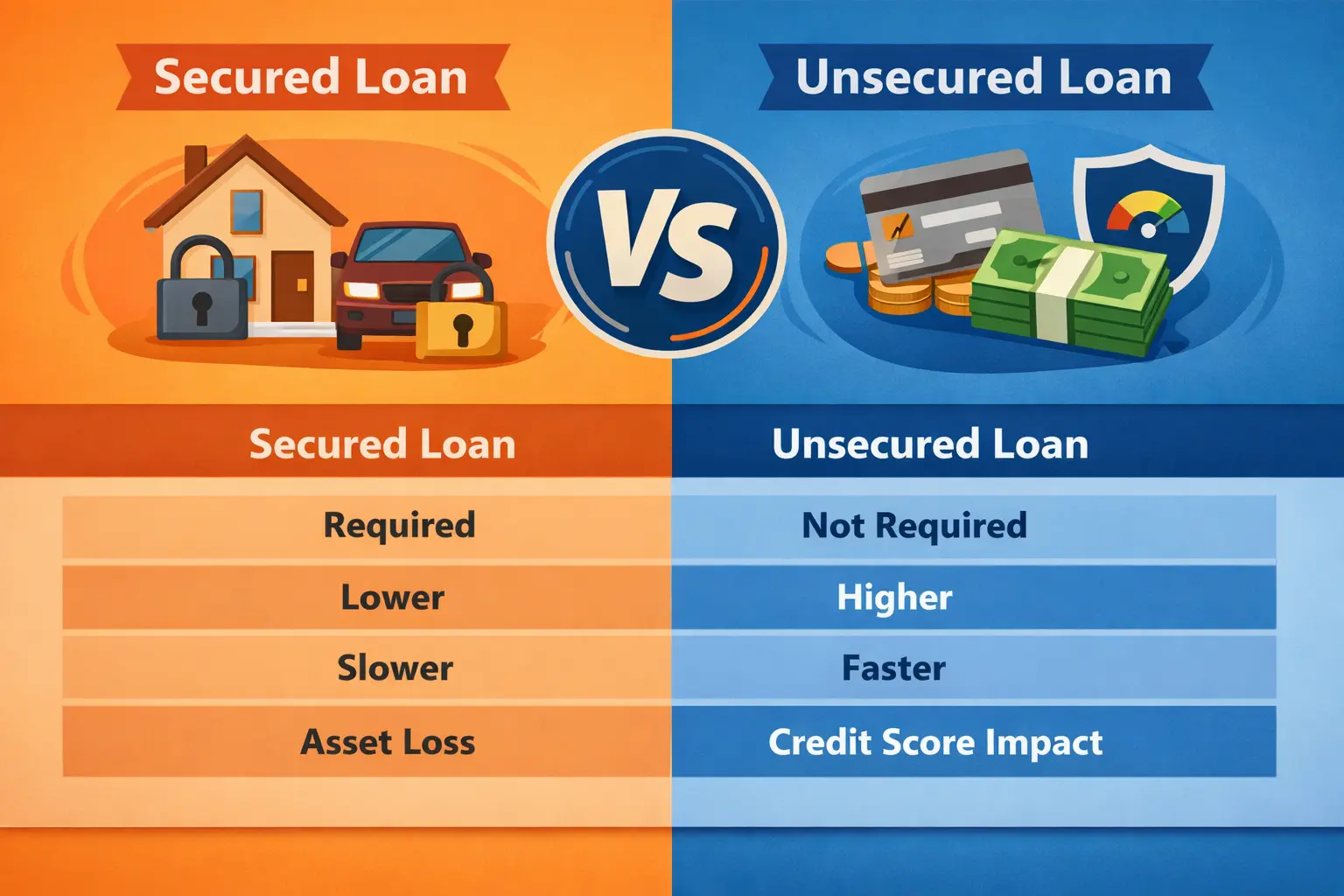
FeatureSecured LoanUnsecured LoanCollateralRequiredNot requiredRisk to LenderLowerHigherInterest RatesGenerally lowerGenerally higherApproval SpeedSlowerFasterBorrowing LimitHigherLowerRisk to BorrowerAsset lossCredit score damageThe presence or absence of collateral is the defining difference—and it influences everything else.
How Lenders Evaluate Risk Differently
Secured Loans: Asset-Focused Evaluation
Lenders prioritize:
- Asset value
- Ownership verification
- Market liquidity
- Condition and depreciation
Your income still matters—but the asset carries significant weight.
Unsecured Loans: Credit-Focused Evaluation
Lenders focus on:
- Credit score
- Payment history
- Income stability
- Debt-to-income ratio
In unsecured lending, your financial behavior is the product.
Interest Rates: Why the Gap Exists
From personal experience, the difference in interest rates can be dramatic.
Why Secured Loans Are Cheaper
- Collateral reduces lender risk
- Recovery is possible if default occurs
- Predictable long-term repayment
Why Unsecured Loans Cost More
- No recovery asset
- Higher default risk
- Shorter repayment windows
Approval Speed and Accessibility
When Secured Loans Make Sense
- Large purchases
- Long-term investments
- Lower monthly payment goals
Approval takes longer due to asset verification.
When Unsecured Loans Shine
- Emergencies
- Short-term cash flow gaps
- Situations where assets can’t be risked
Speed is their biggest advantage—but you pay for it.
Risk Analysis: What Happens If You Miss Payments?
This is where the difference becomes very real.
Secured Loan Consequences
- Asset seizure or repossession
- Long-term financial loss
- Credit score damage
I’ve seen borrowers underestimate this risk. Losing a valuable asset can set back financial progress for years.
Unsecured Loan Consequences
- Aggressive collection efforts
- Legal action in extreme cases
- Significant credit score impact
While no asset is taken, rebuilding credit can be slow and stressful.
Which Loan Type Is Better? (The Honest Answer)
There is no universally better option—only what fits your situation.
Secured Loans Are Better If:
- You want lower interest rates
- You’re borrowing a large amount
- You have a stable asset you can risk
- You prefer predictable long-term payments
Unsecured Loans Are Better If:
- You need fast access to funds
- You don’t want to risk assets
- The loan amount is small or short-term
- You have strong credit history
Personal Decision-Making Framework
Before choosing, I always ask myself these five questions:
- Can I comfortably repay this even if my income dips?
- Am I willing to risk this asset if things go wrong?
- Is speed more important than cost?
- What’s the total repayment over time?
- How will this affect my future borrowing power?
Answering these honestly prevents regret later.
Common Myths About Secured and Unsecured Loans
Myth 1: Secured loans are always safer
Reality: They are cheaper—but riskier if repayment fails.
Myth 2: Unsecured loans don’t hurt much if unpaid
Reality: Credit damage can be long-lasting and expensive.
Myth 3: Only people with poor credit use unsecured loans
Reality: Many high-income borrowers choose them for flexibility.