

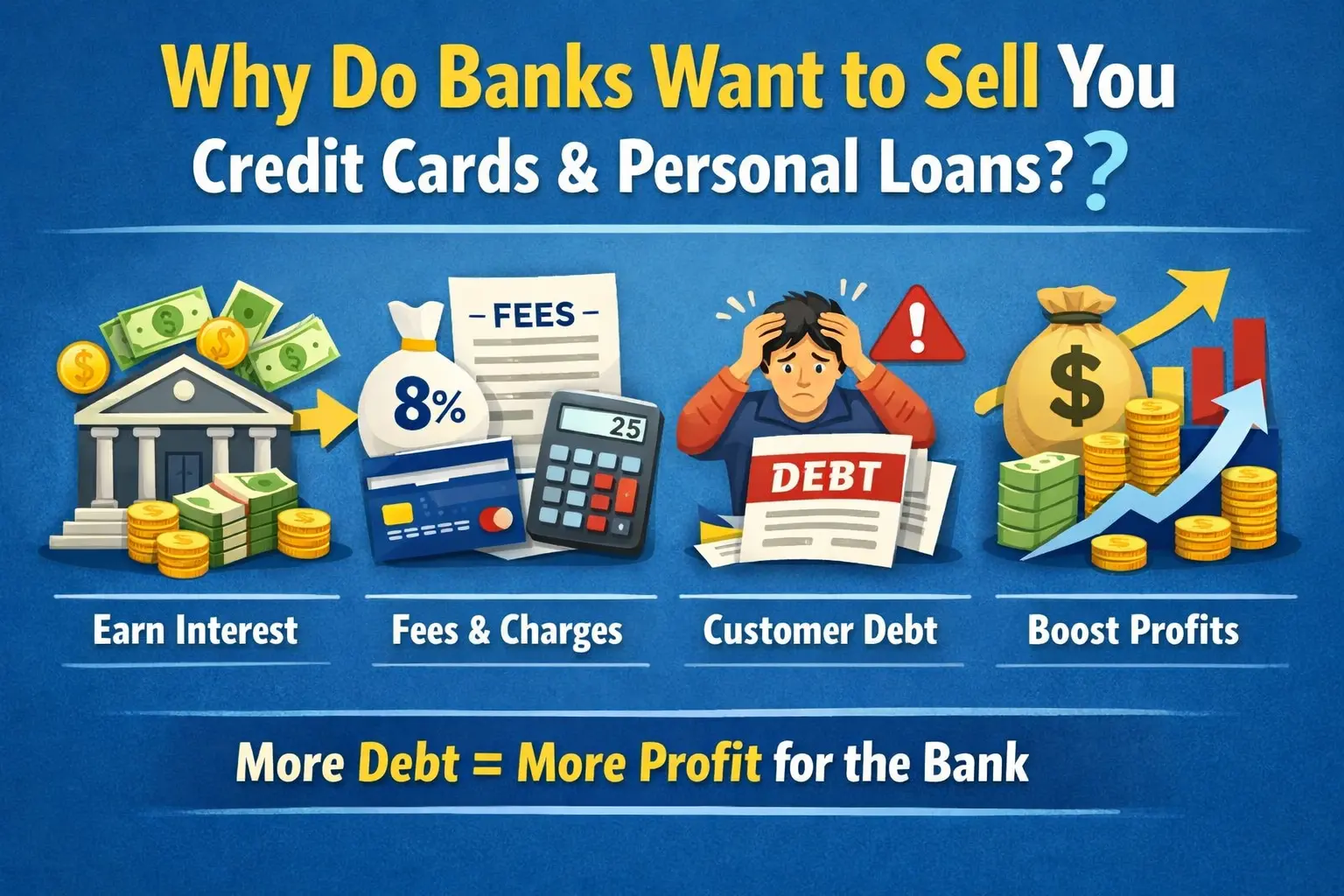
Have you ever wondered why banks keep offering you credit cards, pre-approved personal loans, balance transfers, or “exclusive” financing options—sometimes even when you didn’t ask for them? Whether through emails, app notifications, phone calls, or in-branch conversations, banks are remarkably persistent.
This is not accidental. Banks are strategic, data-driven institutions, and credit products sit at the very center of their business model.
In this in-depth guide, we’ll explore why banks aggressively promote credit cards and personal loans, how they profit from them, what’s in it for you, and—most importantly—how to make smart financial decisions without falling into debt traps. I’ll also share real-world observations and practical tips based on direct experience dealing with banking products over the years.
Understanding the Core Question
Before diving deep, let’s address the central question directly:
Banks try to sell credit cards and personal loans because these products generate long-term, predictable, and high-margin revenue while strengthening customer relationships and data insights.
Now let’s break that down—step by step.
How Banks Actually Make Money (Beyond Deposits)
Many people believe banks mainly make money by holding deposits and charging small service fees. That’s only a small part of the picture.
The Real Profit Engine: Lending
Banks earn the majority of their profits from interest and fees charged on borrowed money. Credit cards and personal loans are particularly attractive because:
- They are unsecured (no collateral required)
- They carry higher interest rates than mortgages or business loans
- They can be issued quickly and at scale
From a bank’s perspective, these products are efficient, scalable, and highly profitable.
Why Credit Cards Are So Valuable to Banks
1. Interest Income Adds Up Over Time
Credit cards often come with revolving balances. That means:
- Customers don’t have to pay the full amount every month
- Interest is charged on the remaining balance
- Interest compounds over time
Even a modest balance carried for several months can generate significant revenue for the bank.
First-hand insight:
I once noticed that even when I paid more than the minimum amount, a portion of interest was still charged. That’s when it became clear how easily long-term costs can grow if balances aren’t cleared fully.
2. Transaction Fees From Every Purchase
Every time you use a credit card, the bank earns a small percentage from the merchant. This happens regardless of whether you pay interest or not.
Multiply this by:
- Millions of customers
- Thousands of transactions per customer per year
…and you get a powerful revenue stream.
3. Annual Fees and Add-On Services
Many cards include:
- Annual or monthly fees
- Charges for premium features
- Fees for late payments or exceeding limits
These fees provide non-interest income, which banks highly value for stability.
Why Banks Push Personal Loans So Aggressively
Personal loans are another major profit center, and banks love them for different reasons.
1. Fixed Interest, Predictable Returns
Unlike credit cards, personal loans usually have:
- Fixed interest rates
- Fixed monthly payments
- Defined repayment periods
This allows banks to forecast income very accurately.
2. No Collateral, Higher Margins
Personal loans are typically unsecured, which means:
- No property or asset backing the loan
- Higher interest rates to compensate for risk
From the bank’s point of view, this balances risk with reward efficiently.
3. Emotional Selling Opportunities
Banks often market personal loans as solutions for:
- Emergencies
- Lifestyle upgrades
- Consolidating existing debt
These emotional triggers make customers more receptive, especially during stressful or transitional periods.
I’ve noticed loan offers appear most often after large transactions or changes in spending behavior. Banks clearly monitor patterns and time their offers carefully.
The Power of Customer Data and Behavioral Insights
Banks don’t randomly push offers. They use sophisticated analytics.
What Banks Analyze
- Spending habits
- Income patterns
- Repayment history
- Life events (indirectly inferred)
- Risk tolerance
With this data, banks can predict:
- Who is likely to accept an offer
- Who is likely to carry a balance
- Who poses acceptable risk
This precision makes selling credit products highly efficient.
Building Long-Term Customer Dependence
Credit Products Increase “Stickiness”
Once you have:
- A credit card
- A personal loan
- Automatic payments set up
You’re less likely to switch banks.
This concept is known as customer lock-in.
The more products you use, the more integrated the bank becomes in your financial life.
Why “Pre-Approved” Offers Feel So Convincing
Banks often use terms like:
- Pre-approved
- Selected
- Exclusive
- Limited-time offer
These phrases are psychologically powerful.
What “Pre-Approved” Usually Means
It typically means:
- You meet basic eligibility criteria
- The bank believes you are profitable
- Final approval still depends on verification
It’s marketing—backed by data.
Are Credit Cards and Personal Loans Bad?
Not necessarily.
The problem isn’t the product—it’s how and why it’s used.
When These Products Make Sense
- Short-term cash flow management
- Emergency expenses
- Planned purchases with full repayment
- Debt consolidation with lower interest
When They Become Dangerous
- Using credit for daily living
- Paying only minimum balances
- Taking loans without repayment planning
- Overlapping multiple credit products
Why Banks Rarely Warn You Strongly Enough
Banks do disclose terms—but usually in fine print.
Why?
Because:
- They are legally compliant
- But not incentivized to discourage borrowing
- Revenue depends on usage, not restraint
This makes financial literacy your responsibility, not theirs.
The Psychological Design Behind Credit Offers
Credit products are designed to feel easy and painless.
Examples:
- Low minimum payments
- Deferred interest promotions
- Reward points that encourage spending
These features reduce the psychological “pain” of spending borrowed money.
I now treat credit cards like debit cards—if I don’t already have the money, I don’t swipe. This single rule changed my financial stability dramatically.
How to Evaluate a Credit Offer Like a Pro
Before accepting any credit card or loan, ask yourself:
Key Questions to Ask
- Do I actually need this now?
- Can I repay without stress?
- What is the total cost over time?
- What happens if my income drops?
- Are there better alternatives?
If the answer isn’t clear, pause.
Smart Strategies to Stay in Control
1. Always Read the Interest Structure
Focus on:
- APR
- Penalty rates
- Grace periods
2. Use Alerts and Limits
- Set spending alerts
- Cap credit limits where possible
3. Pay More Than the Minimum
This reduces:
- Total interest
- Repayment time
- Financial stress
Why Banks Will Keep Selling These Products
Even as regulations evolve, the core reasons remain:
- High profitability
- Predictable revenue
- Data-driven targeting
- Long-term customer retention
As long as people need money flexibility, banks will promote credit products aggressively.
Final Thoughts: Awareness Is Your Strongest Asset
Banks aren’t villains for selling credit cards or personal loans—they are businesses doing what businesses do best: maximizing revenue.
The real question is not why banks try to sell you credit, but how you respond to it.
When you understand:
- Their incentives
- The true cost of borrowing
- Your own financial behavior
You gain control.
Use credit intentionally, not impulsively. Treat every offer as a business proposal—because that’s exactly what it is.
which best explains why banks consider interest on loans to be important click here