

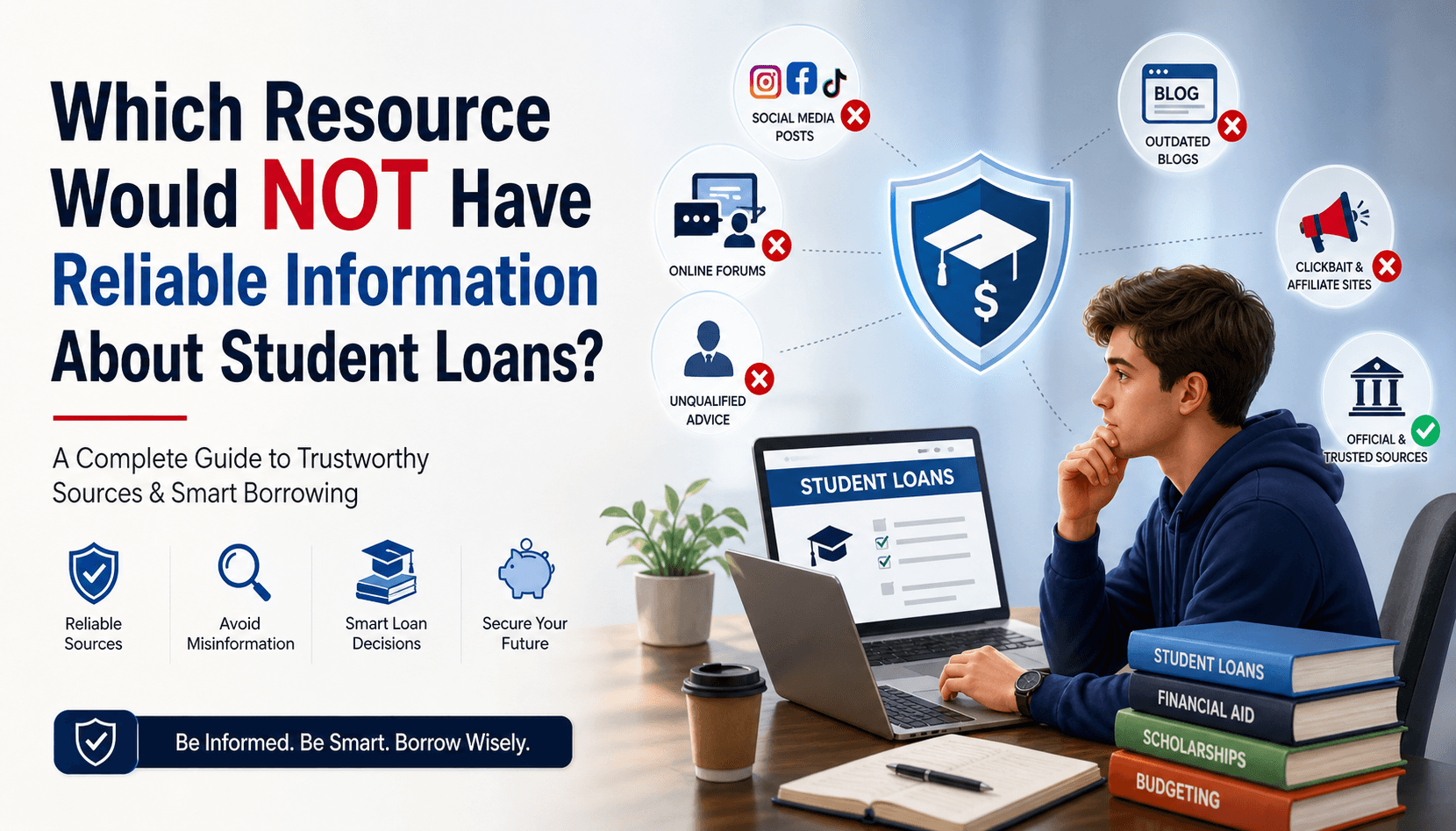
Student loans are one of the most significant financial decisions a student can make. Whether you're planning to study locally or abroad, understanding where to get reliable information is just as important as understanding the loan itself.
But here’s the problem: not all sources are trustworthy.
In my own experience helping students navigate financial aid options, I’ve seen people make costly mistakes simply because they relied on the wrong sources—random blog posts, misleading social media advice, or outdated forums.
This guide will clearly answer the key question:
Which resources would NOT have reliable information about student loans?
And just as importantly, it will show you where you should go instead, how to verify information, and how to avoid common traps.
Most importent:
- Random social media posts or influencers
- Unverified online forums or comment sections
- Outdated blog articles with no sources
- Friends or acquaintances without financial expertise
- Clickbait websites or affiliate-driven content
Why Reliability Matters in Student Loan Information
Before diving deeper, it’s important to understand what’s at stake.
Student loan misinformation can lead to:
- Choosing high-interest loans unnecessarily
- Missing repayment options or forgiveness programs
- Falling for scams or predatory lenders
- Misunderstanding eligibility criteria
I once worked with a student who relied on advice from an online forum. He believed he wasn’t eligible for income-based repayment—when in reality, he was. That mistake cost him thousands over time.
Unreliable Sources You Should Avoid
1. Social Media Posts & Influencers
Social media platforms are full of “financial advice,” but most of it is:
- Oversimplified
- Not personalized
- Sometimes completely incorrect
Why it’s unreliable:
- No verification or fact-checking
- Advice often based on personal opinion, not policy
- Algorithms prioritize engagement, not accuracy
A viral post once claimed “all student loans can be forgiven after 5 years.” That’s simply false in most cases, yet thousands believed it
2. Online Forums & Comment Sections
Platforms like discussion boards or Q&A threads can feel helpful—but they’re risky.
Problems include:
- Anonymous users
- Outdated answers
- Region-specific advice that may not apply to you
Reality check:
Someone answering your question might:
- Be guessing
- Be sharing outdated rules
- Not understand your financial situation
: 3. Outdated Blog Posts
Not all blogs are bad—but many are:
- Written years ago
- Never updated
- Lacking citations
Why this matters:
Student loan policies, interest rates, and repayment plans change frequently.
If an article is even 2–3 years old, parts of it may already be wrong.
Always check the last updated date.
Friends, Family, or Peers Without Expertise
Advice from people you trust can feel safe—but it’s often misleading.
Common issues:
- Their experience may be outdated
- Their loan type may differ from yours
- They may not understand current regulations
Personal insight:
I’ve seen students blindly follow a friend’s loan strategy—only to realize later that their financial situation required a completely different approach.
Clickbait & Affiliate Websites
These sites are designed to:
- Generate clicks
- Promote specific lenders
- Earn commissions
Red flags:
- Headlines like “Best Student Loan in 2026 (Guaranteed Approval!)”
- No mention of risks
- Overly promotional tone
These sites often prioritize profit over accuracy.
Reliable Sources You SHOULD Use Instead
Now that we’ve covered what to avoid, let’s look at trustworthy alternatives.
1. Official Government Websites
These are the most reliable sources because they:
- Provide updated regulations
- Explain repayment plans clearly
- Offer official tools and calculators
2. Accredited Educational Institution
Universities and colleges often provide:
- Verified loan guidance
- Financial aid counseling
- Up-to-date policy information
3. Licensed Financial Advisors
A certified advisor can:
- Analyze your personal situation
- Recommend suitable loan options
- Help with repayment strategies
4. Reputable Financial Publications
Trusted financial platforms usually:
- Cite sources
- Update content regularly
- Provide balanced insights
How to Spot Reliable vs Unreliable Information
Use this quick checklist:
Reliable Content:
✔ Clearly cites sources
✔ Updated recently
✔ Written by experts
✔ Balanced (pros & cons)
✔ Matches official guidelines
Unreliable Content:
✘ No author or credentials
✘ Emotional or exaggerated language
✘ No references
✘ “Too good to be true” claims
✘ Pushes a single product aggressively
Common Myths from Unreliable Sources
Let’s debunk some misinformation often spread by unreliable resources:
All student loans are the same
Loan types vary widely in interest rates, benefits, and repayment options.
You don’t need to worry about interest while studying
Some loans accrue interest immediately.
Loan forgiveness is easy to get
Forgiveness programs have strict eligibility requirements.
:Private loans are always better
They often lack protections found in government-backed loans.
Practical Tips from Real Experience
Here are some strategies that have proven effective :
Never rely on a single source—verify information from at least two trusted platforms.
Policies can change. Keep records of what you read and when.
If possible, contact official support or financial aid offices.
Loan choices should be based on facts—not fear or hype.
The earlier you research, the more options you’ll have.
A Simple Real-Life Scenario
Imagine two students:
Student A:
- Uses social media advice
- Chooses a high-interest loan
- Doesn’t understand repayment
Student B:
- Uses official and verified sources
- Compares loan options
- Plans repayment strategy early
Outcome:
Student B saves significantly more money and avoids stress.
Final Thoughts
Understanding student loans is not just about numbers—it’s about making informed, confident decisions.
So, when asking “Which resource would NOT have reliable information about student loans?”
The answer is clear:
Any source that is unverified, outdated, biased, or based on opinion rather than facts.
Conclusion
Reliable information is your strongest financial tool Avoid the que :
- Social media hype
- Random forums
- Outdated blogs
- Unqualified advice
Instead rely on:
- Official sources
- Verified experts
- Trusted financial platforms
From my experience, the difference between good and bad information can literally mean saving thousands over time.