
Best Budgeting Methods 2026: A Practical, Tested Guide to Taking Control of Your Money
If you want a quick answer: the best budgeting method in 2026 is the one you'll actually stick with for more than three weeks. For most people, that means a hybrid of the 50/30/20 rule, zero-based budgeting, and automated "pay yourself first" transfers — combined with an app that tracks spending in real time. There is no single perfect system, but there is a best-fit system for your income pattern, your personality, and your goals.
I've spent years testing budgeting systems on my own finances — switching jobs, dealing with irregular freelance income, saving for a house deposit, and recovering from months where I overspent badly. What follows isn't theory pulled from a textbook. It's a practical breakdown of what actually works, what tends to fail, and how to pick the right method for your specific situation in 2026.
Why Does Budgeting Feel Harder in 2026 Than It Used To?
Budgeting in 2026 is harder because subscription costs have quietly multiplied, "buy now, pay later" tools have made overspending frictionless, and inflation has reshuffled what a "normal" grocery bill looks like. On top of that, more people now juggle multiple income streams — a main job plus freelance work, a side hustle, or investment income — which makes traditional fixed-category budgets feel outdated almost as soon as you build them.
The good news is that budgeting tools have also improved. Bank-linked apps now categorize spending automatically, flag unusual charges, and forecast your balance days in advance. The methods below are built to work with these tools, not against them.
What Is the 50/30/20 Rule, and Does It Still Work?
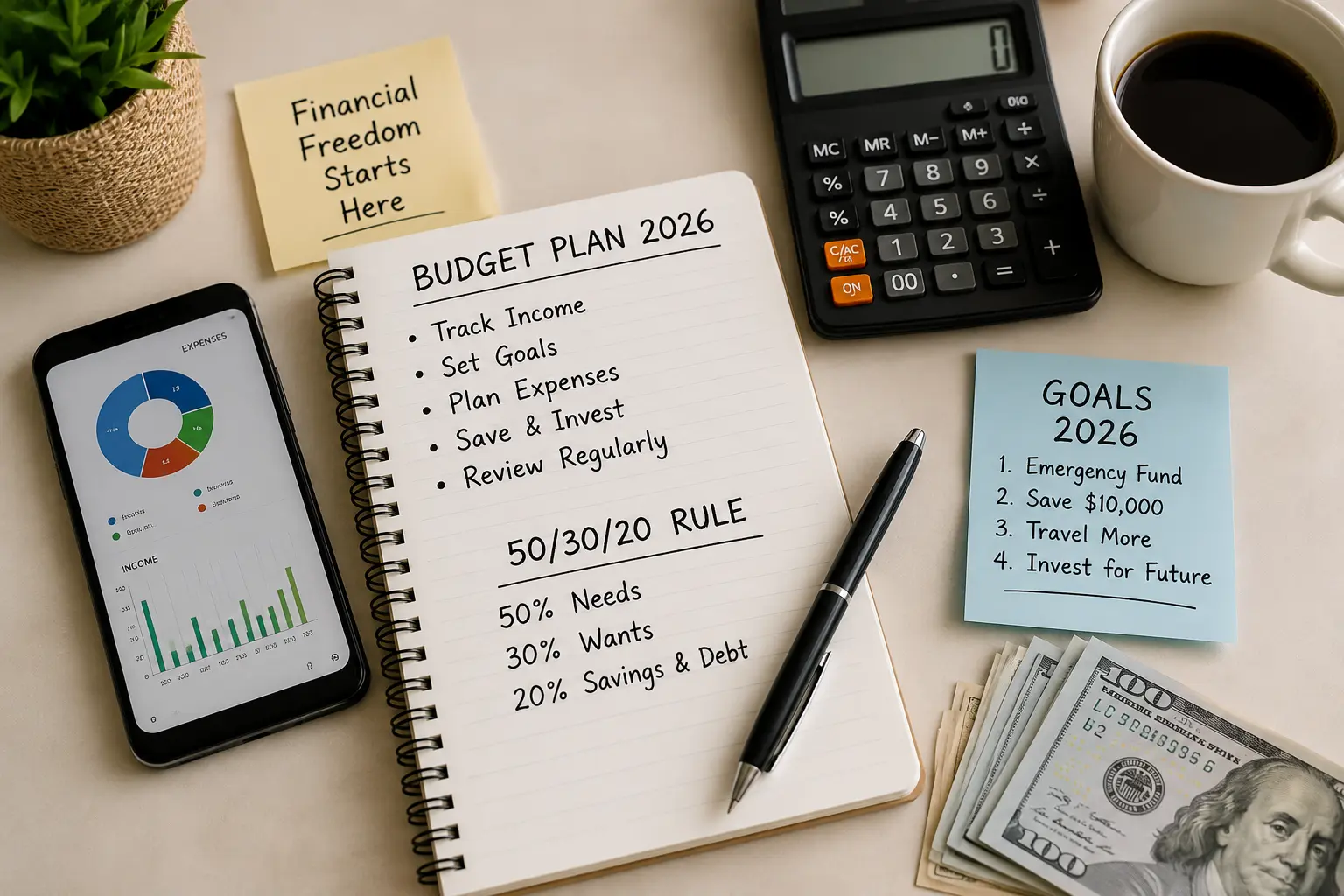
The 50/30/20 rule splits your after-tax income into three buckets: 50% for needs (housing, groceries, utilities, minimum debt payments), 30% for wants (dining out, entertainment, hobbies), and 20% for savings and extra debt repayment.
It still works, but it works best as a starting template, not a rigid rule. When I first tried it, my "needs" category ate up nearly 65% of my income because rent alone was disproportionately high. Rather than abandoning the method, I adjusted the ratios to 60/20/20 for a few months while I looked for ways to reduce fixed costs. That flexibility is the real lesson: use the framework as a diagnostic tool to see where your money is actually going, then adjust the percentages to fit reality instead of forcing your life into someone else's ratio.
What Is Zero-Based Budgeting, and Is It Worth the Effort?
Zero-based budgeting means every unit of income is assigned a job before the month begins — income minus expenses minus savings should equal zero. Nothing is left unaccounted for.
This is the method I personally rely on now, and it's the one that finally stopped money from "disappearing" without explanation. The first time I built a true zero-based budget, I discovered I was spending nearly as much on small app subscriptions and delivery fees as I was on my entire entertainment category combined. Seeing every dollar assigned on paper (or in an app) made that visible in a way percentage-based budgets never did.
The trade-off is time. Zero-based budgeting takes 20–30 minutes at the start of each month and a few minutes of check-ins during the month. If you're willing to put in that effort, it tends to produce the fastest results for debt payoff and savings growth.
People with irregular income, anyone trying to aggressively pay off debt, or anyone who feels like their money "just vanishes."
What Is the Pay-Yourself-First Method?
Pay-yourself-first flips the traditional order of budgeting. Instead of spending first and saving whatever is left, you automatically move a set amount into savings or investments the moment you're paid — then budget the remainder for expenses.
This method removes willpower from the equation entirely, which is exactly why it works so well for people who struggle with consistency. I set up an automatic transfer the day my paycheck lands, before I have a chance to see the "available balance" and mentally justify extra spending. Over a year, that single habit built a larger emergency fund than three previous attempts at manual saving combined.People who find manual saving difficult, or anyone who wants a "set it and forget it" system.
What Is the Envelope System Digital Version?
The envelope system assigns cash to physical envelopes for each spending category — once an envelope is empty, spending in that category stops for the month. The digital version uses banking apps or budgeting apps with virtual "envelopes" or sub-accounts instead of cash.
The physical version has a psychological advantage: watching cash physically run out is a far stronger deterrent than watching a number on a screen decrease. I tested the cash version for groceries and dining out for two months, and overspending in those categories dropped noticeably — simply because handing over cash feels more "real" than tapping a card.
The digital version trades some of that psychological friction for convenience and safety, which matters more for people who rarely carry cash. People who consistently overspend in specific categories like dining out, clothing, or entertainment.
Which Budgeting Method Is Best for Irregular or Freelance Income?
For irregular income, a modified zero-based budget built around your lowest expected monthly income works best, with any income above that baseline routed directly into savings or debt payoff. This "baseline budgeting" approach prevents the common freelance trap of overspending during a good month and then struggling during a lean one.
When freelance income first became a larger part of my earnings, I built my monthly budget using the average of my three worst months from the previous year, not my best month. Everything above that baseline went straight into a separate savings account before I could touch it. That single change removed the panic of lean months almost completely.
Comparison Table: Which Method Fits Your Situation?
How Much Should You Actually Save Each Month in 2026?
A commonly recommended target is at least 20% of after-tax income, split between an emergency fund and long-term savings or investments, though the right number depends heavily on your existing debt load and fixed expenses. If 20% feels impossible right now, starting at 5–10% and increasing it by one percentage point every few months tends to be far more sustainable than attempting a large jump and abandoning the habit within weeks.
A good short-term target most people can work toward is three to six months of essential expenses sitting in an easily accessible emergency fund, before shifting extra savings toward longer-term investing.
What Budgeting Mistakes Should You Avoid?
The most common mistake isn't picking the "wrong" method — it's abandoning a method too quickly after one bad month. Budgets are meant to be adjusted, not restarted from scratch every time reality doesn't match the plan.
A few other patterns worth watching for:
- Ignoring irregular annual expenses like insurance renewals or holiday spending, which then feel like emergencies when they're actually predictable.
- Tracking spending but never reviewing it, which turns budgeting into a data-collection exercise instead of a decision-making tool.
- Setting savings goals with no clear purpose, which makes it easy to raid savings the moment an unrelated expense appears.
I made all three of these mistakes before settling into a system that actually held up over time. The fix in each case wasn't a smarter app — it was building a short monthly review habit, even if it only took ten minutes.
How Do You Choose the Right Method for Yourself?
Start by answering three questions honestly: Is your income stable or irregular? Do you prefer detailed tracking or a hands-off approach? And where does your money usually leak — is it a few specific categories, or does it disappear gradually across everything?
If your income is stable and you want simplicity, start with 50/30/20. If you want full control and are willing to spend a little time each month, zero-based budgeting will likely give you the fastest results. If saving consistently is your main struggle, automate it with pay-yourself-first. And if a specific category keeps blowing your budget, layer the envelope system on top of whichever core method you choose.
Most people I've talked to, and my own experience confirms this, end up landing on a blend rather than a single textbook method — automated savings transfers, a rough percentage-based framework for spending, and an envelope-style limit on the one or two categories that tend to get out of control.
Building a Budget That Actually Lasts
The best budgeting method in 2026 isn't a single formula — it's a system that matches your income pattern, adapts when life changes, and takes as little willpower as possible to maintain. Start simple, track honestly for at least one full month before making major changes, and treat your budget as a living plan rather than a rulebook carved in stone.
Money habits compound the same way savings do. A budgeting system that feels slightly imperfect but that you actually follow for a year will outperform a "perfect" system you abandon after three weeks, every single time.