
What Is Finance Reserve Income?
Reserve Income in the Finance Industry
Finance reserve income is a term that often appears in lending, automotive financing, and dealer financing agreements. Many borrowers sign loan documents without realizing that reserve income may exist behind the scenes, influencing how lenders, brokers, and dealers earn money.
If you have ever applied for a vehicle loan, personal financing, or dealership financing, you may have indirectly contributed to finance reserve income. Understanding how it works can help consumers make smarter financial decisions and help businesses improve transparency.
This guide explains everything you need to know about finance reserve income, including how it works, who earns it, how it affects borrowers, and why it matters in modern lending.
What Is Finance Reserve Income?
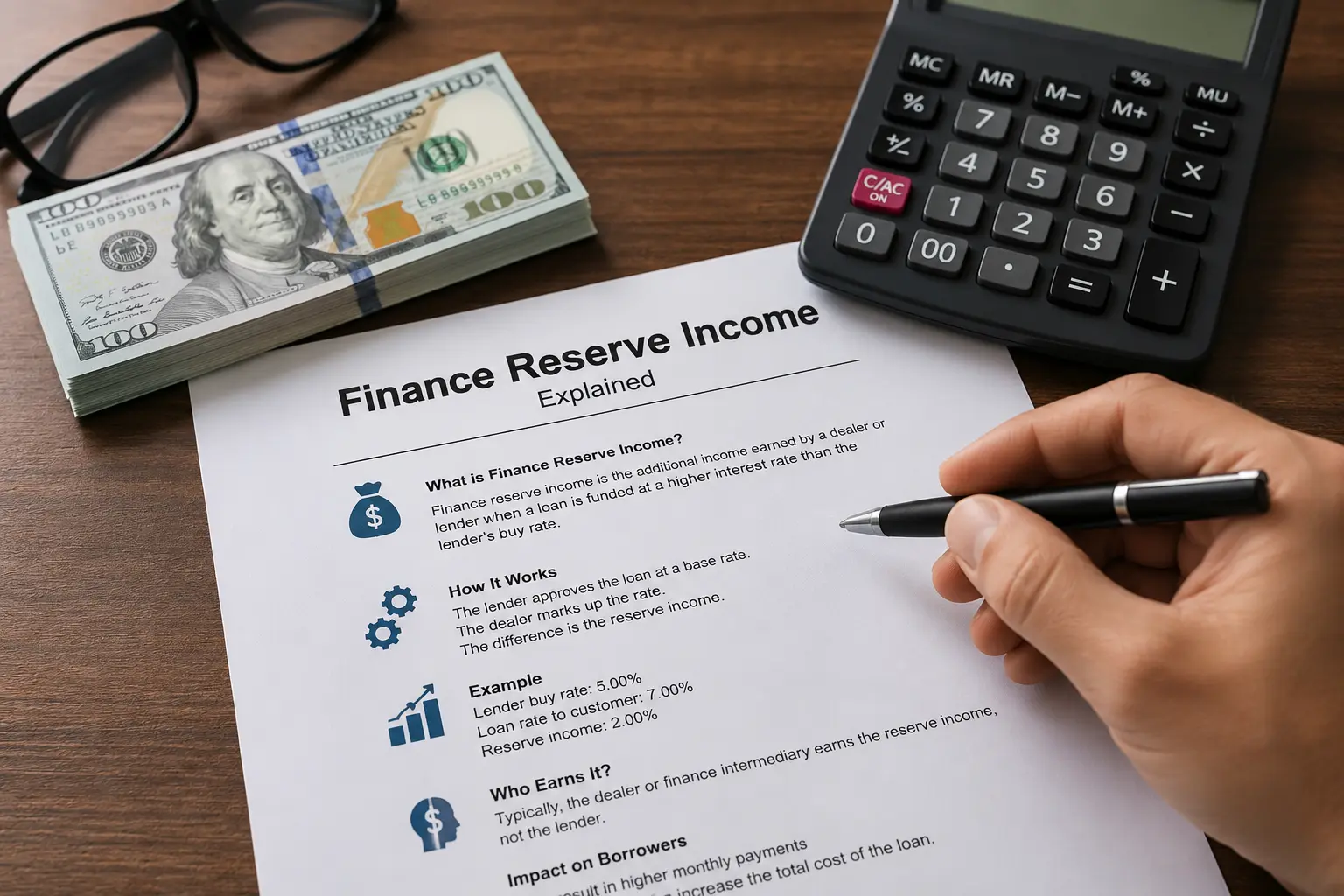
Finance reserve income refers to the additional profit earned by a dealer, broker, or intermediary when a loan is arranged at an interest rate that is higher than the lender's minimum approved rate.
Simply put, a lender may approve a borrower for a loan at one interest rate, while the dealer or finance intermediary offers the customer a slightly higher rate. The difference between these rates creates reserve income.
This income acts as compensation for the intermediary who helped arrange the financing.
Simple Example
Imagine a lender approves a borrower for a loan at 5%.
The dealer offers the customer financing at 7%.
The 2% difference may generate reserve income for the dealer.
The borrower still receives financing, while the intermediary earns compensation for arranging the loan.
How Finance Reserve Income Works
1. Customer Applies for Financing
A borrower applies for financing through a dealership, finance broker, or lending partner.
2. Lender Reviews the Application
The lender evaluates:
- Credit history
- Income level
- Employment status
- Debt obligations
- Financial stability
3. Lender Approves a Base Rate
The lender determines the minimum interest rate based on risk.
4. Dealer Presents Financing
The intermediary presents financing options to the customer.
5. Reserve Income Is Generated
If the final loan rate exceeds the lender's approved rate, the difference may create reserve income.
Why Lenders Allow Reserve Income
Lenders use reserve programs because they encourage dealers and intermediaries to submit loan applications.
Benefits for lenders include:
- Larger customer reach
- Increased loan volume
- Reduced marketing costs
- Stronger dealer relationships
- Higher financing penetration
Dealers become motivated to offer financing because they can earn additional income beyond product sales.
Industries Where Finance Reserve Income Is Common
Finance reserve income is often found in:
Automotive Financing
Vehicle dealerships frequently earn reserve income through financing arrangements.
Equipment Financing
Business equipment dealers sometimes participate in reserve programs.
Recreational Vehicle Financing
Boat, motorcycle, and recreational vehicle dealers may earn reserve compensation.
Retail Financing
Some retailers offering installment financing participate in reserve arrangements.
Finance Reserve Income vs Interest Income
Many people confuse these two concepts.
Finance Reserve IncomeInterest IncomeEarned by dealers or intermediariesEarned by lendersBased on interest rate markupBased on the entire loanActs as compensationActs as lending profitOften paid onceEarned over the life of the loanUnderstanding this distinction is important because the borrower pays the loan interest, while reserve income determines how that interest is shared.
Is Finance Reserve Income Legal?
finance reserve income is generally legal when properly disclosed and compliant with lending regulations.
Financial institutions must follow rules regarding:
- Fair lending practices
- Consumer protection laws
- Disclosure requirements
- Non-discriminatory pricing
- Transparent financing terms
Regulators often monitor financing practices to ensure borrowers receive fair treatment.
Does Finance Reserve Income Affect Borrowers?
Yes, it can.
A higher interest rate may increase:
- Monthly payments
- Total interest paid
- Overall borrowing cost
For example:
A borrower taking a five-year loan at 5% may pay significantly less interest than someone paying 7%.
Even a small difference in interest rates can increase total loan costs.
Therefore, borrowers should always:
- Compare financing offers.
- Ask about interest rates.
- Review loan documents carefully.
- Negotiate financing terms.
Real-World Example
A customer purchases a vehicle costing $30,000.
The lender approves financing at 6%.
The dealer offers financing at 7.5%.
The additional rate difference generates reserve income for the dealership.
The customer may not notice the difference because monthly payments appear manageable, but over several years, the total cost increases.
This example shows why understanding financing terms is extremely important.
Personal Experience and Practical Insights
In many financing discussions, borrowers focus mainly on monthly payments instead of total loan cost.
A common mistake is asking:
"How much will I pay each month?"
A better question is:
"What interest rate was approved, and what is the total borrowing cost?"
Financial professionals often recommend obtaining loan quotes from multiple sources before accepting dealership financing.
This approach gives borrowers negotiating power and may reduce overall financing costs.
Advantages of Finance Reserve Income
Additional Revenue for Dealers
Reserve income creates another income stream.
Better Financing Access
Customers may receive financing options they might not obtain independently.
Increased Sales Opportunities
Businesses can offer convenient financing solutions.
Stronger Customer Experience
One-stop financing can simplify the purchasing process.
Disadvantages of Finance Reserve Income
Higher Interest Rates
Borrowers may pay more.
Reduced Transparency
Some customers may not understand how financing works.
Potential Conflicts of Interest
Intermediaries may prioritize higher commissions.
Increased Loan Costs
Long-term borrowing expenses may rise.
How Consumers Can Protect Themselves
Consumers should follow these steps:
Compare Multiple Offers
Never accept the first financing offer.
Check Your Credit Score
Better credit often means lower rates.
Negotiate the Interest Rate
Interest rates are sometimes negotiable.
Questions to ask include:
- What interest rate was approved?
- Is dealer compensation included?
- Can I see multiple financing options?
Read the Contract
Always review every financing document carefully.
The Role of Credit Scores
Credit scores strongly influence loan approval rates.
Borrowers with stronger credit profiles generally receive:
- Lower interest rates
- Better loan terms
- More lender choices
- Reduced financing costs
Improving credit before applying for financing can significantly reduce borrowing expenses.
Finance Reserve Income and Business Accounting
Businesses typically record reserve income as finance-related revenue.
Accounting treatment may depend on:
- Contract structure
- Payment timing
- Revenue recognition rules
- Regulatory requirements
Companies often monitor reserve income as an important profitability metric.
Future Trends in Finance Reserve Income
Several trends are shaping the future:
Increased Transparency
Consumers demand clearer financing information.
Digital Lending Platforms
Online lending allows easier comparison shopping.
Regulatory Oversight
Authorities continue monitoring fair lending practices.
Consumer Education
Financial literacy helps borrowers make informed decisions.
Competitive Financing Markets
Greater competition may reduce excessive markups.
Final Thoughts
Finance reserve income plays an important role in modern lending and dealer financing. While it provides additional revenue for dealers and intermediaries, it can also affect the total cost paid by borrowers.
Understanding how reserve income works allows consumers to make better decisions, compare financing options, and negotiate more effectively.
The most important lesson is simple: focus on the total cost of borrowing, not just the monthly payment. Asking questions, comparing offers, and reviewing loan terms carefully can help borrowers save money and avoid unnecessary expenses.
By improving financial knowledge and understanding reserve income, consumers can approach financing with greater confidence and make smarter long-term decisions.
FAQ :
What does finance reserve income mean?
It is compensation earned by a dealer or intermediary when financing is arranged above the lender's approved interest rate.
Is finance reserve income the same as interest?
No. Interest belongs to the lender, while reserve income is compensation for the intermediary.
Can borrowers negotiate financing rates?
Yes. Many financing terms and rates can be negotiated.
Is reserve income disclosed?
Disclosure requirements vary depending on regulations and financing agreements.
Does reserve income increase loan costs?
It can increase total borrowing costs if it results in a higher interest rate.
Is finance reserve income common?
Yes. It is commonly found in automotive and dealer-arranged financing.