
What Is the Opportunity Cost of Saving Money?
Making Smarter Decisions
Saving money is one of the healthiest financial habits you can develop. It provides security, reduces financial stress, and prepares you for unexpected expenses. However, every financial decision comes with trade-offs. While saving money is important, placing too much money in low-return savings accounts can also mean giving up opportunities that could potentially grow your wealth faster.
This trade-off is known as the opportunity cost of saving money.
Many people assume saving is always the best financial decision, but personal finance is about balance. Understanding what you gain—and what you give up—helps you make better decisions based on your goals, timeline, and risk tolerance.
After helping friends and family organize their finances and reviewing countless saving and investing strategies over the years, I've noticed one common mistake: people either save far too little or save almost everything while ignoring investment opportunities. Both approaches can slow long-term financial progress. The smartest strategy usually combines saving and investing instead of choosing only one.
In this guide, you'll learn exactly what opportunity cost means, how it affects your savings, real-world examples, common mistakes to avoid, and practical strategies to maximize your financial future.
What Is Opportunity Cost?
Opportunity cost is the value of the next best alternative you give up when making a financial decision.
Every time you choose one option, you automatically give up another. That forgone benefit represents your opportunity cost.
For example:
- If you spend $500 on a new phone, you give up the opportunity to invest that $500.
- If you invest all your money, you give up immediate access to cash.
- If you keep large amounts in a savings account, you may miss higher returns available through long-term investments.
Opportunity cost isn't always measured only in dollars. It can also include:
- Lost investment growth
- Lost purchasing power
- Missed business opportunities
- Reduced financial flexibility
- Time
Understanding opportunity cost helps you compare financial choices instead of viewing them individually.
What Is the Opportunity Cost of Saving Money?
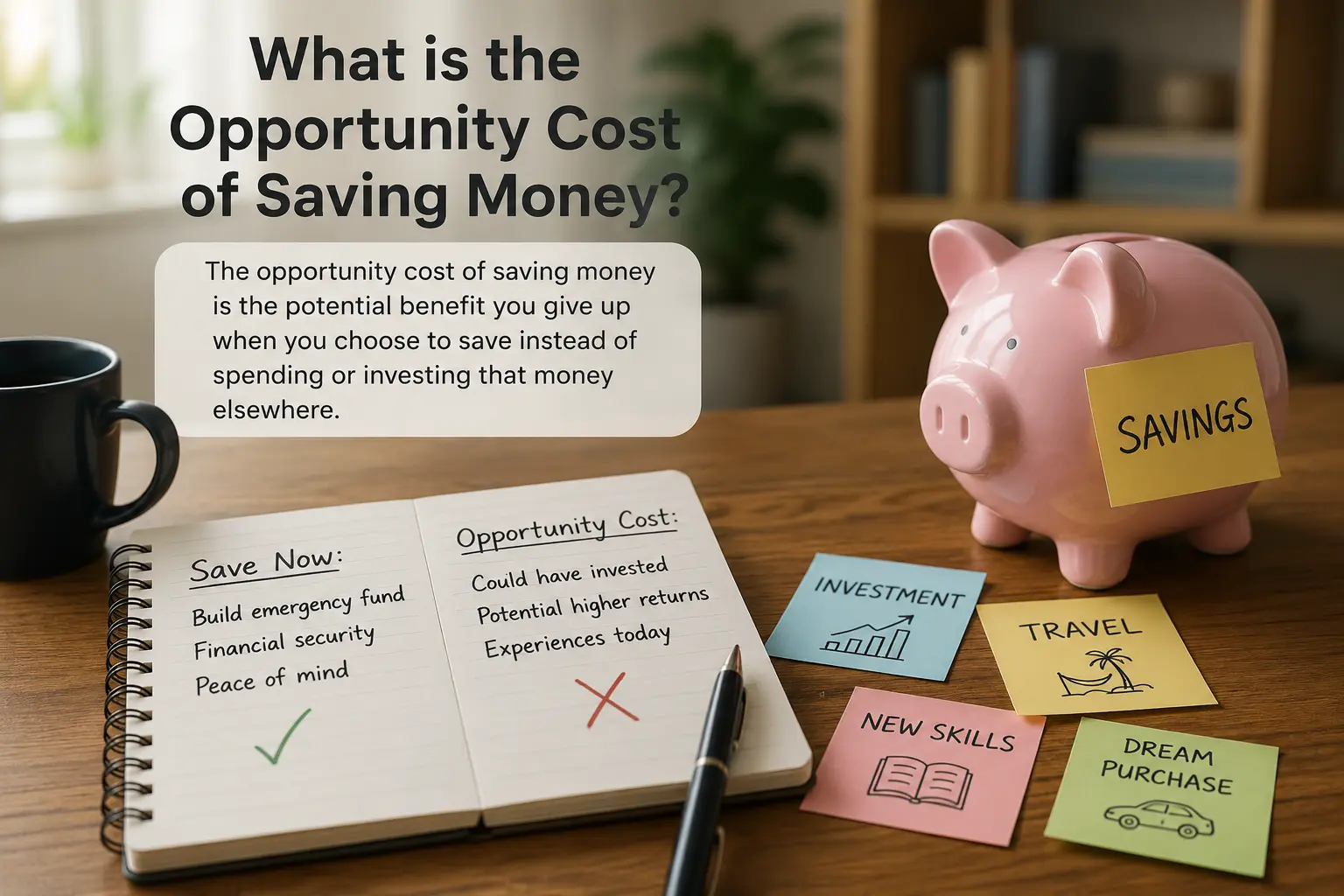
The opportunity cost of saving money refers to the potential benefits you give up by keeping your money in savings rather than using it elsewhere.
Savings accounts provide safety and liquidity, but they typically generate lower returns than long-term investments.
For example, imagine you save $20,000 in a traditional savings account earning a modest interest rate for ten years.
During that same period, a diversified long-term investment portfolio may have generated significantly higher average returns. By choosing the safer option, you sacrificed the possibility of greater wealth growth.
That difference represents the opportunity cost.
This doesn't mean saving is a bad decision.
Instead, it means every dollar should have a purpose.
Money needed soon belongs in savings.
Money intended for long-term goals may be more effective when invested appropriately.
Why Opportunity Cost Matters in Personal Finance
Many people focus only on avoiding financial losses.
Successful financial planning also considers the gains you may be missing.
Understanding opportunity cost helps you:
- Build wealth more efficiently
- Make informed financial decisions
- Balance risk and reward
- Prioritize financial goals
- Avoid leaving money idle unnecessarily
When you evaluate every financial choice through this lens, your decisions become more intentional.
Example
Imagine Sarah receives a $10,000 bonus.
She has three choices.
Option 1: Save Everything
She deposits all $10,000 into a savings account.
Advantages include:
- Immediate access
- Low risk
- Emergency protection
Disadvantages:
- Lower long-term growth
- Inflation may reduce purchasing power
Option 2: Invest Everything
She invests the full amount.
Advantages:
- Higher long-term growth potential
Disadvantages:
- Market volatility
- Limited liquidity
- Possible short-term losses
Option 3: Balance Both
Sarah keeps six months of expenses in savings and invests the remaining amount.
This approach balances security with long-term wealth creation.
In many situations, this balanced strategy minimizes opportunity cost while reducing financial risk.
The Biggest Opportunity Costs of Saving Too Much
1. Missing Investment Growth
Perhaps the largest opportunity cost is missing compound growth.
Money invested over many years has more time to generate returns, and those returns can generate additional returns.
The longer money remains invested, the more powerful compounding becomes.
Keeping excessive cash in savings means giving up this long-term advantage.
2. Inflation Reduces Purchasing Power
Inflation slowly increases the price of goods and services.
If your savings earn less than inflation over time, your money effectively loses buying power.
For example:
If inflation averages 3% annually while your savings earn 1%, your purchasing power declines.
Even though your account balance increases slightly, it buys less than before.
3. Delayed Retirement Growth
Every year you postpone investing can reduce the total amount available during retirement.
Starting early often matters more than investing larger amounts later because compound growth needs time.
4. Lost Business Opportunities
Saving every available dollar may prevent you from:
- Starting a business
- Learning valuable skills
- Purchasing productivity tools
- Building additional income streams
Sometimes investing in yourself produces the highest long-term return.
5. Lower Passive Income Potential
Investment assets may eventually produce income through dividends, interest, or appreciation.
Holding excessive cash delays building these future income sources.
When Saving Money Is the Right Decision
Opportunity cost doesn't mean investing is always better.
There are many situations where saving should be the priority.
These include:
Building an Emergency Fund
Unexpected events happen.
Medical bills, vehicle repairs, job loss, or urgent home expenses can occur without warning.
Keeping emergency savings prevents high-interest debt during difficult times.
Short-Term Goals
If you plan to use the money within the next few years, savings often provide more stability.
Examples include:
- Vacation
- Home down payment
- Wedding
- Education expenses
- Vehicle purchase
Avoiding High-Interest Debt
Paying off expensive debt may provide a better financial return than investing.
Reducing interest costs improves overall financial health.
Financial Peace of Mind
Money isn't only about numbers.
Many people sleep better knowing they have accessible cash available.
That emotional benefit has real value.
When Investing May Be the Better Choice
Investing generally becomes more attractive when:
- Your emergency fund is complete.
- You have manageable debt.
- Your goals are long term.
- You understand investment risk.
- You can leave the money untouched for many years.
Long-term investing works because time reduces the impact of short-term market fluctuations.
Savings vs Investing: Understanding the Trade-Off
Neither option is universally better.
The best choice depends on your financial objectives.
How to Reduce the Opportunity Cost of Saving Money
1. Keep Only Your Emergency Fund in Cash
One lesson I've personally found valuable is avoiding the temptation to keep every extra dollar in savings simply because it feels safer.
A dedicated emergency fund provides confidence.
Beyond that amount, additional cash often becomes less productive.
2. Define Every Dollar's Purpose
Instead of one large savings account, assign money to specific goals.
Examples include:
- Emergency fund
- Vacation fund
- Home purchase
- Retirement investing
- Education
- Business growth
Purpose-driven saving improves decision-making.
3. Invest Consistently
Regular investing helps reduce the pressure of trying to perfectly time the market.
Small, consistent contributions often outperform waiting for the "perfect" opportunity.
4. Review Your Savings Regularly
Financial needs change over time.
Review your savings every few months.
Ask yourself:
- Is this money needed soon?
- Could part of it work harder elsewhere?
- Have my goals changed?
Regular reviews keep your financial strategy aligned with your life.
5. Continue Learning About Personal Finance
Knowledge reduces expensive mistakes.
The more you understand budgeting, investing, taxes, debt management, and financial planning, the better your future decisions become.
Common Misconceptions About Opportunity Cost
"Saving Money Is Always the Best Choice"
Saving is essential, but excessive saving may reduce long-term wealth growth.
Balance matters.
"Investing Means Gambling"
Responsible long-term investing differs significantly from speculation.
Diversification and patience reduce unnecessary risk.
"Opportunity Cost Only Applies to Investing"
Opportunity cost affects nearly every financial decision:
- Spending
- Borrowing
- Saving
- Investing
- Education
- Career choices
I Need a Lot of Money to Invest
Many investment platforms allow people to begin with relatively small contributions.
Starting early is often more valuable than waiting until you have a larger amount.
A Practical Framework for Deciding Between Saving and Investing
Whenever you receive extra money, ask yourself these questions:
- Will I need this money within the next few years?
- Do I already have an emergency fund?
- Do I have high-interest debt?
- Am I comfortable with temporary market fluctuations?
- What financial goal does this money support?
These questions make opportunity cost much easier to evaluate.
Example Scenario
Imagine you receive a $5,000 work bonus.
Rather than placing the entire amount into savings, you might decide to:
- Reserve part for emergencies.
- Pay down expensive debt.
- Invest part for retirement.
- Set aside a small amount for personal enjoyment.
This balanced approach allows your money to serve multiple purposes while reducing opportunity cost.
Final Thoughts
Understanding the opportunity cost of saving money can completely change the way you think about personal finance. Saving is essential because it provides stability, protects against unexpected expenses, and creates peace of mind. However, keeping every available dollar in low-return savings may quietly reduce your ability to build long-term wealth.
The most effective financial strategy is rarely choosing between saving and investing—it is knowing when each serves a different purpose. Emergency funds and short-term goals belong in accessible savings, while long-term objectives often benefit from investments that have the potential to grow over time.
From my own experience, the biggest improvement in financial decision-making came from assigning every dollar a job instead of letting money sit without a purpose. Once I began separating emergency savings from long-term investments, my financial plan became clearer, more organized, and more effective.
Ultimately, opportunity cost isn't about regretting your choices. It's about making intentional decisions that align with your goals. By understanding what you gain—and what you give up—you can create a balanced financial strategy that supports both today's security and tomorrow's opportunities.
Frequently Asked Questions
Is saving money bad?
Not at all. Saving provides financial security and protects you during emergencies. The opportunity cost simply reminds us that keeping too much money in low-return accounts may limit long-term wealth growth.
How much money should stay in savings?
A common recommendation is maintaining enough savings to cover several months of essential living expenses, though the right amount depends on your income stability, responsibilities, and personal comfort level.
Should beginners focus on saving or investing first?
For most people, building an emergency fund first creates a solid financial foundation. After that, gradually investing for long-term goals often provides a balanced approach.